Search This Blog

Showing posts with label Latin. Show all posts

Tuesday, 3 April 2012

What is the difference between i.e. and e.g.?

The term i.e. tends to come up a lot in writing, but what does it actually mean? And why is it different from e.g?

I.e. is an abbreviation for the Latin term 'id est', which means 'that is' or 'in other words'. So you use i.e. when you want to clarify things a little bit further. For example:

The key issue at hand, i.e. who will rid of all this raw sewerage, really needs to be addressed as soon as possible.

Things got a lot worse after that, i.e everybody died.

E.g. on the other hand, is short for 'exampli gratia', which means 'for example'. As you can see, e.g. wouldn't work in the two examples we looked at above, because the i.e.'s in question are not examples of something, they are the key clarifying aspect of the sentence.

So if you want to say something like 'a number of vegetables, for example, carrots, celery, snow peas and beets, appear to have come to life', you could also say 'a number of vegetables, e.g. carrots, celery, snow peas and beets, appear to have come to life.'

or, A lot of the things that people need, e.g. clean water, shelter, and food, are inaccessible since the floods.

And what is the deal with the full stops that come out of nowhere?  Yes, as you might have noticed both i.e. and e.g. have awkward full stops after them. But the truth is, those full stops are there because both i.e. and e.g. are abbreviations.

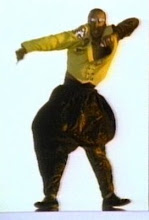
While we think about these differences, let's look at this picture of an actor playing Mark Antony, a famous Latin speaker, pictured here trying to decide who he's going to kill next.

Mmmm. Well, there are a number of people who might just stand in the way of me gaining absolute power, and there are a number of ways I could kill them, e.g. push them over a cliff, poison them, or even send an army to snuff them out.

Monday, 23 January 2012

Capitalisation for titles

As you know, we have once before jumped into the crystal clear waters of how to use capital letters.

But my fans have told me that they are hungry for more information. They have contacted me via twitter, facebook, gmail chat and telegram, begging me to give them more information about how to use capital letters in the right way.

And certainly, capital letters are confusing, not least when you are writing the title of something, such as a memoir you have just written about your life, or a thesis on the mating patterns of salmon, or even a power ballard. Questions you might find yourself asking are "Should my power ballard be written 'The Love Exchange Only Hands Out Monopoly Money', or 'The love exchange only hands out monopoly money', OR should only some of those words be in capitalised?"

Let me explain.

When you are writing titles, some words need to be capitalised, and others don't need to be. The ones that do need to be capitalised are:


The words that should not be capitalised, unless they are the first or last word, are:

  • articles (a, an, the) 
  • conjunctions (and, but, for, nor, or, so, yet) 
  • short adpositions (3 and less letters long): at, by, for, in, of, off, on, out, to, up
  • some Latin abbreviations (most common only): c./ca./cca. (circa), et al. (et alii), etc. (et cetera), e.g. (exempli gratia), i.e. (id est), lb. (libra), vs. (versus). 
  • medium adpositions (4 letters long): down, from, into, like, near, onto, over, than, with, upon.
For example

That Tall Man, He Runs Fast!

All these words fall into the first category of words that should be capitalised. On the other hand, a title like:

Who's That Man over there?

Would not need to be all capitals because the words in blue are prepositions, which are not to be capitalised.

Some other examples:

Believing the Lie (i.e.first word/article/last word)

Diary of a Whimpy Kid (i.e. first word/short adposition/article/adjective/last word)  

It Was Just a Bit of Fun (i.e first word/verb/adjective/article/noun/adposition/last word)

These Titles Seem to Be Getting Longer and Longer (first word/noun/verb/adposition/verb/verb/adjective/coordinating conjunction/adjective)

But HOLD THE FUCKING PHONE for a minute. You might have noticed that like some sort of hypocritical monstrous dictator of some sort, MC Grammar himself does not follow these rules in his own blog posts. What the fuck? Well, this is where capitalisation for titles gets hazy, because the rules for blog titles are still hazy. For example, the very fine Julie Burchill, a very long-established journalist, only capitalises the first word of her titles, and any proper nouns that come up, whereas the very funny Cody Johnston tends to capitalise everything except coordinating conjunctions. Both are highly respectable journalists and writers, both are well-school in the fine arts of grammar. So who to follow? Well, the best bet is to follow the rules I have set up here, but just remember that the internet is a changing beast, and what rules arise for capitalisations, we simply don't know yet.

To see us out, let's sit back, relax, and listen to the very excellent Capital Letters, who never mess up their capitalisations of titles, and hope that someday you can be like them.

Tuesday, 8 June 2010

Indecent Preposition

Alright. Again, MC Grammar hasn't exactly hit the mark with this week's post title. I am all too aware that it doesn't really work, since the movie I am cleverly pop-culture referencing is actually 'Indecent Proposal', not 'Indecent Proposition.' It would never have been called 'Indecent Proposition', because that doesn't have the same zing to it. Being MC Grammar and only achieving lukewarm wordplay is like throwing stones when you live in a glass house and wear a glass house-robe. Because of this failure, I hurl myself on my four-poster bed in frustration. But we have to try to keep a perspective, and focus on the reason we're all here: to learn about prepositions.

So what is a preposition? Well, a preposition links words to other words in a sentence, like 'with', 'under' 'without' 'on', and 'from'.

A preposition 'locates' an object For example,

The book is on the table

I am beneath the tree.

She held the book during class

I want to be on you


In each sentence, the preposition locates the object in time or space.


A prepositional verb 'introduces' nouns, and explains just what the hell they are doing. For example;


The boy climbed a tree.


There was rejoicing throughout the land


Each time, the preposition has 'introduced' the noun and linked the two nouns in the sentence together.

Put simply, a preposition explains what shit is doing in a sentence together. If a preposition was a person, it would be that person at a party who knows everyone, so when you walk in and exclaim 'Hey - I didn't know they knew each other!', preposition is all like 'oh yeah, didn't you know? They live in same apartment block', or 'oh yeah, they used to go to the same yoga class' or 'oh yeah, they've only just met, but they're really going for it, huh?'


Now, here is the tricky part. Some people think that prepositions should never go at the end of a sentence. They think that, for example, instead of saying 'who do you live with', you should say 'with whom do you live?'

The problem with trying to stick to this rule is that you end up talking like Yoda. When Winston Churchill was knocked for ending a sentence with a preposition, he answered 'This is the sort of thing up with which I will not put!' Snap, Winston.


MC Grammar reckons that the only time you shouldn't end a sentence with a preposition is when it's unnecessary. For example,


I've got the money that I'll be paying you with.


Here 'with' is extra – you didn't need it. You could have just said 'I've got the money that I'll be paying you'. This is the only time that the prepositional rule should be used.


The main reason that some people still stick to this rule is because of that jerk that I hate, Latin. That's right, Latin's back, telling English what to do, calling it fat and short-sheeting its bed in the middle of winter. In Latin, prepositions tend to get attached to the object that they are 'introducing.' For example, The Latin word for 'wine' is 'Vinium' But in the saying 'In Vino Veritas' (In wine there is truth) 'Vino' shows that it's the wine that is the subject of the saying. This means that prepositions can never be found at the end of sentences in Latin, and as a result, in English we are never meant to do it either.

Not only is this stupid, but really impractical. Some more demure grammar peeps will try to not to rock the boat by suggesting that instead of saying

Who do you want to speak to?


You should say


To whom do you want to speak?


Why? If the whole point of grammar is to communicate with each other, and a person is already doing that just fine, like in the first sentence above, why complicate things? The good news is that grammar brothers and sisters have been calling bullshit on this rule for over a hundred years - in 1902, Harvard Professor Adam Sherman Hill pointed out that it was a bit crap, and then in 1918, James C. Fernald really went for the jugular in 'A Senseless Tradition', claiming that 'there was never any sense in the rule, and people go on using the prohibited idiom every day.'


Snap, James C. Fernald. You're right. It might have been OK, back in the day when 'whom' was not an out-dated form of language, but these days it's just silly, and trying to defend it is like trying to say that fat-dripping is a good thing to put on your toast instead of butter - just because they used to do it doesn't make it right or good. In fact, it explains a lot of health problems that old people have now.


When all is said and done, the rule around prepositions is one that we don't need to worry about, but it's still good to know what exactly a preposition is. You can throw it into conversation at any time, impressing people with your highly-tuned grammar skills. And in the rare cases where it's helpful to know when you've overdosed on prepositions, it could make all the difference.


Let's finish up on this humorous 'Grammar Wizard' cartoon from the Perry Bible Fellowship, that pretty much sums up the whole situation. And ask yourself; do you really want a world where this might happen?  


Wednesday, 22 July 2009

U Can’t Split This: the old-school rule of not splitting your infinitives.

MC Grammar is from the school of thought that the purpose of grammar and punctuation is to communicate better with each other. It should make it easier to communicate with more people – not less. So when something can be understood without being technically grammatically correct, then I think it should become acceptable.

A good example of this is ‘Split Infinitives.’

An infinitive is the ‘stem’ of a verb. In other words, it is the universal form of the verb, when it hasn’t been changed. For example, ‘To have’, ‘to change’ ‘to eat’, etc. Verbs stop being infinitive when they are changed to fit with different tenses or to agree with plurals, for example, if 'to have' is the infinitive,‘We have lunch with Sam’ could become ‘We had lunch with Sam’ or ‘She has lunch with Sam.’ and so on.

About thirty years ago, school kids were being taught that an infinitive form of a verb could not be separated from its little ‘to’ companion. For example, saying ‘I need to quickly speak with you’ was regarded as bad grammar. The reason? In Latin, as in some other Latin-based languages today, an infinitive could never be split, not least because the ‘to’ part was built into it, in the same way as the French infinitive for ‘to speak’ is ‘Parler’, hence it couldn’t be split, obviously, unless you were some crazy person who thought it was cool to wedge a whole extra word into the centre of another.

So the key reason that you weren’t meant to split an infinitive was because some other language, one that people tended to look up to as being more distinguished, couldn’t split its own infinitives. This is why people in old novels tend to say things like ‘I need quickly to speak with you.’ Or ‘Finally I go to attend to mama today.’

Sticking to the rule of infinitives is all very well if you happen to go back in time, find yourself in Ancient Rome, can’t speak of word of Latin but feel reassured that whatever they’re saying, they’re not splitting their infinitives, but what relevance does it have for speakers of modern English? A sentence continues to make sense even where an infinitive has been split, and so as far as MC Grammar is concerned, pack this rule away next to your mini-disc player and your floppy discs.