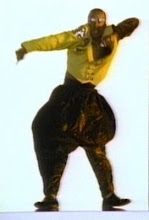
MC Grammar is from the school of thought that the purpose of grammar and punctuation is to communicate better with each other. It should make it easier to communicate with more people – not less. So when something can be understood without being technically grammatically correct, then I think it should become acceptable.
A good example of this is ‘Split Infinitives.’
An infinitive is the ‘stem’ of a verb. In other words, it is the universal form of the verb, when it hasn’t been changed. For example, ‘To have’, ‘to change’ ‘to eat’, etc. Verbs stop being infinitive when they are changed to fit with different tenses or to agree with plurals, for example, if 'to have' is the infinitive,‘We have lunch with Sam’ could become ‘We had lunch with Sam’ or ‘She has lunch with Sam.’ and so on.
About thirty years ago, school kids were being taught that an infinitive form of a verb could not be separated from its little ‘to’ companion. For example, saying ‘I need to quickly speak with you’ was regarded as bad grammar. The reason? In Latin, as in some other Latin-based languages today, an infinitive could never be split, not least because the ‘to’ part was built into it, in the same way as the French infinitive for ‘to speak’ is ‘Parler’, hence it couldn’t be split, obviously, unless you were some crazy person who thought it was cool to wedge a whole extra word into the centre of another.
So the key reason that you weren’t meant to split an infinitive was because some other language, one that people tended to look up to as being more distinguished, couldn’t split its own infinitives. This is why people in old novels tend to say things like ‘I need quickly to speak with you.’ Or ‘Finally I go to attend to mama today.’
Sticking to the rule of infinitives is all very well if you happen to go back in time, find yourself in Ancient Rome, can’t speak of word of Latin but feel reassured that whatever they’re saying, they’re not splitting their infinitives, but what relevance does it have for speakers of modern English? A sentence continues to make sense even where an infinitive has been split, and so as far as MC Grammar is concerned, pack this rule away next to your mini-disc player and your floppy discs.
Showing posts with label Toffs. Show all posts
Showing posts with label Toffs. Show all posts
Wednesday, 22 July 2009

Saturday, 4 July 2009
More correct than you: How hypercorrections impress no-one.
I once heard a great quote that went ‘a high brow is just someone who has been educated beyond their intelligence.’ There’s a lot of truth in there. The great institution of grammar tends to be a haven for people who know a lot about language, but not much about anything else, such as not being jerks.
This is where the scourge of ‘hypercorrections’ hits us. A hypercorrection is where a non-standard grammatical rule is applied in the belief that it is correct, even though a more familiar, standard rule would work just fine. Put simply, it’s masturbation with words.
One of the most common hypercorrections is the Me and I rule. Most people are taught at school that you don’t say ‘Me and you should eat our lunches now’, you say, you and I should eat our lunches now. That’s fine, but I don’t know about you, but as a kid at school, MC Grammar had it drummed into his head that using the word me was as bad as stripping naked and doing a poo on the Queen of Sweden, due to the idea that it could be uncouthly misused where the more refined I should have been.
As a result, a lot of people tend to think that using I is more proper than using me. This is where you get sentences like 'He gave it to you and I'. This is incorrect. The rule is that the pronoun (You, we, she, he, them) that would stand in isolation is the one that you should use. For example, you would say I went to the movies, therefore you would say You and I went to the movies. However, you would say he gave it to me, not he gave it to I, therefore you would say he gave it to you and me, not he gave it to you and I.
The best way to remember this rule is to simply remind yourself that the pronoun that would stand in isolation is the one to use. For example, when you hear someone say The letter was for you and I, you know that they should have said The letter was for you and me, because you can't say The letter was for I (Unless you are a seventeenth-century fictional pirate, obviously)
This cool video which talks about the correct pronounciation of often, might be just what you need to help you along as you let your thoughts about hypercorrection sink in. Enjoy!
This is where the scourge of ‘hypercorrections’ hits us. A hypercorrection is where a non-standard grammatical rule is applied in the belief that it is correct, even though a more familiar, standard rule would work just fine. Put simply, it’s masturbation with words.
One of the most common hypercorrections is the Me and I rule. Most people are taught at school that you don’t say ‘Me and you should eat our lunches now’, you say, you and I should eat our lunches now. That’s fine, but I don’t know about you, but as a kid at school, MC Grammar had it drummed into his head that using the word me was as bad as stripping naked and doing a poo on the Queen of Sweden, due to the idea that it could be uncouthly misused where the more refined I should have been.
As a result, a lot of people tend to think that using I is more proper than using me. This is where you get sentences like 'He gave it to you and I'. This is incorrect. The rule is that the pronoun (You, we, she, he, them) that would stand in isolation is the one that you should use. For example, you would say I went to the movies, therefore you would say You and I went to the movies. However, you would say he gave it to me, not he gave it to I, therefore you would say he gave it to you and me, not he gave it to you and I.
The best way to remember this rule is to simply remind yourself that the pronoun that would stand in isolation is the one to use. For example, when you hear someone say The letter was for you and I, you know that they should have said The letter was for you and me, because you can't say The letter was for I (Unless you are a seventeenth-century fictional pirate, obviously)
This cool video which talks about the correct pronounciation of often, might be just what you need to help you along as you let your thoughts about hypercorrection sink in. Enjoy!
Sunday, 5 April 2009
Why Even Bother?
I know this is what you're wondering. You're thinking, 'ho hum, another toff tries to find yet another way for me to feel shit about myself. Well you can you can go to hell in a hand-basket MC Grammar, because grammar's just what smarmy people use to put everyone else down! I hate you!'
It's true – correcting people over their grammar is the height of rudeness. No-one ever appreciates it, in fact a lot of people also consider it pointless. What does it really matter if an apostrophe is out of place, or if 'your' and 'you're' get mixed up. Who cares? You still get your point across, right?
It depends on who you're trying to get your point across to. Yeah, your mates on facebook are going to be down with your avant garde ways, but how hard does it become trying to write a cover letter for a job when you're not sure of where an apostrophe goes in 'its' or 'it's'? Most employers just throw away an application at the sight of one of those indescrepancies, so grammar can end up being the difference between getting ahead and staying where you are.
But that's all pretty superficial business. More importantly, the purpose of grammar is to help make a sentence clearer – otherwise it's just a way of showing off.
As Lynne Truss, who wrote 'Eats, Shoots and Leaves' said, grammar and punctuation are the traffic signs of language. They prevent meaning from getting confused. For example: A used car show-yard sign reads, 'Used cars for sale: Why go elsewhere to be cheated? Come here first!' This looks wrong because of a mangled subject/verb agreement. More on that later. I promise it will be awesome. But more than that, the bottom line is that a lot of the time, you're not actually saying what you think you're saying, and that's like wearing a hessian sack and thinking you're in Prada.
Probably the number one example of this is the case of 'your'. I'm going to settle this score in the next post, but for now I'll say that when someone writes something like 'hope your well', the nearest thing they're actually asking is 'hope you have turned into a well.'
It's important to remember to MC Grammar loves you. MC Grammar has noticed your outrageous physical attractiveness, and also finds you funny and witty. MC Grammar doesn't mean to offend you or be a toff –and don't forget, MC Grammar makes grammar mistakes all the times. If this blog really annoys you, but helps you just a smidgen to write a letter or impress someone you're trying to sleep with, then my massive pants are filled with funky joy.
It's true – correcting people over their grammar is the height of rudeness. No-one ever appreciates it, in fact a lot of people also consider it pointless. What does it really matter if an apostrophe is out of place, or if 'your' and 'you're' get mixed up. Who cares? You still get your point across, right?
It depends on who you're trying to get your point across to. Yeah, your mates on facebook are going to be down with your avant garde ways, but how hard does it become trying to write a cover letter for a job when you're not sure of where an apostrophe goes in 'its' or 'it's'? Most employers just throw away an application at the sight of one of those indescrepancies, so grammar can end up being the difference between getting ahead and staying where you are.
But that's all pretty superficial business. More importantly, the purpose of grammar is to help make a sentence clearer – otherwise it's just a way of showing off.
As Lynne Truss, who wrote 'Eats, Shoots and Leaves' said, grammar and punctuation are the traffic signs of language. They prevent meaning from getting confused. For example: A used car show-yard sign reads, 'Used cars for sale: Why go elsewhere to be cheated? Come here first!' This looks wrong because of a mangled subject/verb agreement. More on that later. I promise it will be awesome. But more than that, the bottom line is that a lot of the time, you're not actually saying what you think you're saying, and that's like wearing a hessian sack and thinking you're in Prada.
Probably the number one example of this is the case of 'your'. I'm going to settle this score in the next post, but for now I'll say that when someone writes something like 'hope your well', the nearest thing they're actually asking is 'hope you have turned into a well.'
It's important to remember to MC Grammar loves you. MC Grammar has noticed your outrageous physical attractiveness, and also finds you funny and witty. MC Grammar doesn't mean to offend you or be a toff –and don't forget, MC Grammar makes grammar mistakes all the times. If this blog really annoys you, but helps you just a smidgen to write a letter or impress someone you're trying to sleep with, then my massive pants are filled with funky joy.
Subscribe to:
Posts (Atom)