Amy made a terrible mistake that has to do with the internet fridge.
You see, around 2003, Amy had a lot of money. She had been saving up her wages for years, because she had a feeling that a major technological breakthrough was about to burst out of the dull mould of all that had come before, such as mini-disk players, or the 1969 h316 computer, which cost $10,000 US and could only store recipes.
And then, there it was: the internet fridge. It was breathtaking. It had so many features – it had the internet, obviously, but it also had a computerised notepad, where people could write messages to each other like ‘get milk’ instead of just writing a regular note. Photos of the happy family that owned the internet fridge could also be flashed in a slide show sequence, instead of just putting regular photos up on the fridge. It had so many features. And in addition to that, it was also a fridge, where food could be stored, just like a regular fridge. That was enough for Amy. She knew that this was the technological moment that she had been waiting for. And she had also saved $15,000, which was what the internet fridge cost.
And then, twelve months later, Amy heard talk of something called an 'iPod'. Suddenly, everyone was using one, revelling in the fact that they no longer had to lumber around with CD players jammed in their pants, or that they would have buy complicated walkman-pouches so they could play their single CD over and over again, until they could get home to play it. And they revelled in how they could store all the music they owned in this tiny machine. Amy tried to keep talking up the merits of the internet fridge, but no one wanted to listen any more. In fact, they couldn’t hear her at all, because they were all listening to their iPods, which had cost a mere $500.
Poor Amy. Because of her bad decision, she found herself trapped in the recent past. She suddenly belonged to a time in the past that wasn’t too distant, but was just outdated enough to push her out of the present. This is just like our grammar spotlight today, and the dilemma of used to and use to.
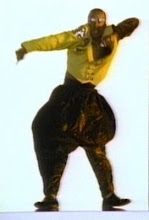
These are two terms are trapped in a swampy marsh of the past, but serve different functions. What is the difference between these two terms? Is there a difference? Step into my funky tardis and let’s find out.
These terms may look the same, but they are used for describing different time periods.
As you may know, the word use is a verb, and the past tense of use is used.
The term used to is for when you’re talking about repeated actions or events that happened a long time ago, but have now stopped.
When I was single, I used to spend my weekends writing complaint letters to David Jones.
You can also use it for actions that you once did a lot, but now don’t do as much.
We used to go out all the time.
This implies you may still go out sometimes, but not as often as before.
You say use to when it follows did or didn’t. For example,
Didn’t you use to type out swear words with your label maker and stick them to pigeons?
I didn’t use to grow a moustache, but when I got dumped for the 36th time I changed my mind.
Did you use to ride the monster truck?
In these sorts of sentences, the action (typing, growing a beard, riding the monster truck) are not completely in the past, and they may not have happened all that long ago – in fact there’s a chance they have escaped into the present, and may even career into the future like a drunk on a hoverboard. For this reason, we use the present tense, use. Just to be on the safe side. MC Grammar thinks you should always be safe. I don’t want to have to meet your mother’s eye and tell her what happened to you out there when you tried to describe something that was only in the recent past, and got confused. Don’t put me in that situation.
This might all seem hard to follow, but there’s a very simple way of remembering how to go about things. If the words did or didn’t are in the sentence, then you say use. If did or didn’t aren’t there, then you say used to. This is the simplest way of working this out, and knowing exactly what time period you're talking about.