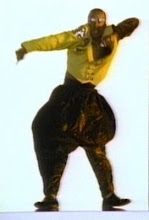
I feel shame. It's the kind of shame that you know you should have, and you attend years of cognitive therapy to see how irrational your shame is, but when you're lying in your four-poster bed in the dark, you can't help but feel like you're just a really a bad person.
You see, despite all my wonderful qualities, it is pretty often that I misspell the word definitely.
Yes, even me, who loves grammar so much that my children are named 'Suffix', 'Elipsis' and 'Dash' sometimes falters when I am called upon to remember whether you spell definitely or definitley.
The short story is it's definitely. You might think that that's confusing, because it's not like you say definit-elly, but you see, the e in definitely is silent. In this case, definite is the main part of the word, while -ly is the suffix.
A suffix is a group of letters that are at the end of a word to make a new word. The most common example of a suffix is the s that is added to the end of things, like cats, to indicate that something is plural.
Other examples of suffixes include:
Suffix Original Word Suffixed Word
en Eat Eaten
ing Sleep Sleeping
al accident accidental
able tax taxable
ly brother brotherly
ful forget forgetful
ly helpful helpfully
We have now learnt not only about prefixes but also suffixes, so to top all this off, let's listen to this rap that puts it all together:
Showing posts with label four-poster bed. Show all posts
Showing posts with label four-poster bed. Show all posts
Monday, 18 July 2011

Monday, 28 February 2011
'Commadore Norrington, my effects please': The difference between affect and effect
The difference between affect and effect has confused more than a few people. And make no mistake, sometimes even MC Grammar can end up throwing himself on his four-poster bed, howling in frustration at this very tricky area of grammar.
But lucky for us, the difference between affect and effect is a lot simpler than you might think. The thing is, effect and affect are homonyms, which means that even though they sound the same, they have different meanings. Read on, grammar children.
Affect means:
1. To have an influence or cause a change in something
Too much sunlight affected the quality of the photograph
2. To act on the emotions of, to touch, to move.
The arguments and fighting affected me badly
3. To attack or infect
Rabies affects the brain
Effect, on the other hand, means:
1. A result
The drugs took effect immediately
There was more positive information available about immigration, effecting a change attitudes towards immigrants.
2. The power to produce an outcome or achieve a result
The president's threats to kill everyone had no effect on the protesters
3. Something that produces a specific impression, or supports a general design or intention:
The fireworks were the best effects of the concert
If you ever get lost, there's a handy way of remembering the difference. In the movie 'Pirates of the Caribbean', Captain Jack Sparrow has managed to get off from being arrested. Demanding his stuff back, he says: 'Commodore Norrington, my effects please, and my hat'. When Sparrow asks for his effects he means his sword, his compass, and his belt. These are his effects, meaning the things that make him Captain Jack Sparrow. Your effects are the things that add a little something to the occasion, which is why fireworks are effects, or special animation techniques in a movie are effects.

But lucky for us, the difference between affect and effect is a lot simpler than you might think. The thing is, effect and affect are homonyms, which means that even though they sound the same, they have different meanings. Read on, grammar children.
Affect means:
1. To have an influence or cause a change in something
Too much sunlight affected the quality of the photograph
2. To act on the emotions of, to touch, to move.
The arguments and fighting affected me badly
3. To attack or infect
Rabies affects the brain
Effect, on the other hand, means:
1. A result
The drugs took effect immediately
There was more positive information available about immigration, effecting a change attitudes towards immigrants.
2. The power to produce an outcome or achieve a result
The president's threats to kill everyone had no effect on the protesters
3. Something that produces a specific impression, or supports a general design or intention:
The fireworks were the best effects of the concert
If you ever get lost, there's a handy way of remembering the difference. In the movie 'Pirates of the Caribbean', Captain Jack Sparrow has managed to get off from being arrested. Demanding his stuff back, he says: 'Commodore Norrington, my effects please, and my hat'. When Sparrow asks for his effects he means his sword, his compass, and his belt. These are his effects, meaning the things that make him Captain Jack Sparrow. Your effects are the things that add a little something to the occasion, which is why fireworks are effects, or special animation techniques in a movie are effects.

Tuesday, 8 June 2010
Indecent Preposition
Alright. Again, MC Grammar hasn't exactly hit the mark with this week's post title. I am all too aware that it doesn't really work, since the movie I am cleverly pop-culture referencing is actually 'Indecent Proposal', not 'Indecent Proposition.' It would never have been called 'Indecent Proposition', because that doesn't have the same zing to it. Being MC Grammar and only achieving lukewarm wordplay is like throwing stones when you live in a glass house and wear a glass house-robe. Because of this failure, I hurl myself on my four-poster bed in frustration. But we have to try to keep a perspective, and focus on the reason we're all here: to learn about prepositions.
So what is a preposition? Well, a preposition links words to other words in a sentence, like 'with', 'under' 'without' 'on', and 'from'.
A preposition 'locates' an object For example,
The book is on the table
I am beneath the tree.
I am beneath the tree.
She held the book during class
I want to be on you
In each sentence, the preposition locates the object in time or space.
A prepositional verb 'introduces' nouns, and explains just what the hell they are doing. For example;
The boy climbed a tree.
There was rejoicing throughout the land
Each time, the preposition has 'introduced' the noun and linked the two nouns in the sentence together.
Put simply, a preposition explains what shit is doing in a sentence together. If a preposition was a person, it would be that person at a party who knows everyone, so when you walk in and exclaim 'Hey - I didn't know they knew each other!', preposition is all like 'oh yeah, didn't you know? They live in same apartment block', or 'oh yeah, they used to go to the same yoga class' or 'oh yeah, they've only just met, but they're really going for it, huh?'
Now, here is the tricky part. Some people think that prepositions should never go at the end of a sentence. They think that, for example, instead of saying 'who do you live with', you should say 'with whom do you live?'
The problem with trying to stick to this rule is that you end up talking like Yoda. When Winston Churchill was knocked for ending a sentence with a preposition, he answered 'This is the sort of thing up with which I will not put!' Snap, Winston.
MC Grammar reckons that the only time you shouldn't end a sentence with a preposition is when it's unnecessary. For example,
I've got the money that I'll be paying you with.
Here 'with' is extra – you didn't need it. You could have just said 'I've got the money that I'll be paying you'. This is the only time that the prepositional rule should be used.
The main reason that some people still stick to this rule is because of that jerk that I hate, Latin. That's right, Latin's back, telling English what to do, calling it fat and short-sheeting its bed in the middle of winter. In Latin, prepositions tend to get attached to the object that they are 'introducing.' For example, The Latin word for 'wine' is 'Vinium' But in the saying 'In Vino Veritas' (In wine there is truth) 'Vino' shows that it's the wine that is the subject of the saying. This means that prepositions can never be found at the end of sentences in Latin, and as a result, in English we are never meant to do it either.
Not only is this stupid, but really impractical. Some more demure grammar peeps will try to not to rock the boat by suggesting that instead of saying
Who do you want to speak to?
You should say
To whom do you want to speak?
Why? If the whole point of grammar is to communicate with each other, and a person is already doing that just fine, like in the first sentence above, why complicate things? The good news is that grammar brothers and sisters have been calling bullshit on this rule for over a hundred years - in 1902, Harvard Professor Adam Sherman Hill pointed out that it was a bit crap, and then in 1918, James C. Fernald really went for the jugular in 'A Senseless Tradition', claiming that 'there was never any sense in the rule, and people go on using the prohibited idiom every day.'
Snap, James C. Fernald. You're right. It might have been OK, back in the day when 'whom' was not an out-dated form of language, but these days it's just silly, and trying to defend it is like trying to say that fat-dripping is a good thing to put on your toast instead of butter - just because they used to do it doesn't make it right or good. In fact, it explains a lot of health problems that old people have now.
When all is said and done, the rule around prepositions is one that we don't need to worry about, but it's still good to know what exactly a preposition is. You can throw it into conversation at any time, impressing people with your highly-tuned grammar skills. And in the rare cases where it's helpful to know when you've overdosed on prepositions, it could make all the difference.
Let's finish up on this humorous 'Grammar Wizard' cartoon from the Perry Bible Fellowship, that pretty much sums up the whole situation. And ask yourself; do you really want a world where this might happen?
Thursday, 9 April 2009
Your and You're
For those of you who don't have time to read this whole post, here's the quick guide to your and you're:
You're – You are
Your – Something you own
Your and you're has to be the most divisive aspect of grammar around. Confusion about these two is so widespread that MC Grammar sometimes hurls himself onto his large, four-poster bed and cries from a sense of helplessness. But we can sit around all day and find people to blame for this grammatical mishap, or we can settle this score on the dancefloor. Come with me!
As I've said before, MC Grammar loves you, and doesn't want you to feel bad if you've just looked at the quick guide above, and your face is becoming paler as every grammar mistake you've ever made with your and you're is now dancing in front of your eyes like so many mischieveous leprechauns. There's no need to feel bad, just grab the horns of now and ride fearlessly into a grammatically correct future!
The best way to work out whether you're after your or you're in a sentence, is to ask yourself if you're saying you are, or if you are referring to something the other person owns. For example. 'Hey! You're right!' means 'you are right.' If you say 'your right', you're referring to their right-hand side.
Think of it like this - you cannot say any of these things:
Your great
Hope your ok
Your lying
Your welcome
Your looking trim
Because 'Your' is like 'Mine', 'hers', 'his' and 'theirs'. It's something that belongs to you.
But you can say:
What's your phone number?
Your mum!
Your car is missing
Your jumper is nice
Your cat just said 'Aubergine'
If you ever get completley confused, the best thing to do is, each time you're about to use your, ask yourself if you're saying you are in a shortened version. If you're not, hold back cowboy! Control yourself and your base animal urges! You'll be needing a you're there instead.
This video is also very entertaining and helpful. I think it's mostly directed at the thousands of abusive comments he gets for sharing his videos with the world, hence the slightly bitter undertone. MC Grammar has too much love to share this bitter undertone, but likes the cut of his jib anyway.
You're – You are
Your – Something you own
Your and you're has to be the most divisive aspect of grammar around. Confusion about these two is so widespread that MC Grammar sometimes hurls himself onto his large, four-poster bed and cries from a sense of helplessness. But we can sit around all day and find people to blame for this grammatical mishap, or we can settle this score on the dancefloor. Come with me!
As I've said before, MC Grammar loves you, and doesn't want you to feel bad if you've just looked at the quick guide above, and your face is becoming paler as every grammar mistake you've ever made with your and you're is now dancing in front of your eyes like so many mischieveous leprechauns. There's no need to feel bad, just grab the horns of now and ride fearlessly into a grammatically correct future!
The best way to work out whether you're after your or you're in a sentence, is to ask yourself if you're saying you are, or if you are referring to something the other person owns. For example. 'Hey! You're right!' means 'you are right.' If you say 'your right', you're referring to their right-hand side.
Think of it like this - you cannot say any of these things:
Your great
Hope your ok
Your lying
Your welcome
Your looking trim
Because 'Your' is like 'Mine', 'hers', 'his' and 'theirs'. It's something that belongs to you.
But you can say:
What's your phone number?
Your mum!
Your car is missing
Your jumper is nice
Your cat just said 'Aubergine'
If you ever get completley confused, the best thing to do is, each time you're about to use your, ask yourself if you're saying you are in a shortened version. If you're not, hold back cowboy! Control yourself and your base animal urges! You'll be needing a you're there instead.
This video is also very entertaining and helpful. I think it's mostly directed at the thousands of abusive comments he gets for sharing his videos with the world, hence the slightly bitter undertone. MC Grammar has too much love to share this bitter undertone, but likes the cut of his jib anyway.
Subscribe to:
Posts (Atom)