Search This Blog

Showing posts with label MC Grammar's love for you.. Show all posts

Monday, 15 February 2010

More Grammatically Correct Than Jesus


Actually, MC Grammar can't be sure if he's got more grammar than Jesus did, and it would be a hard thing to compare since Jesus spoke Aramic anyway, but it was a good way to introduce this blog post on the difference between than and then.


A lot of us know how to use than and then, but can't actually explain why. It's a bit like learning how to ride a bike. Once you've got the hang of it, you never forget, but you couldn't actually stand in front of a room of people and explain why suddenly, one day, you stopped falling on your side and started soaring along with the wind in your hair, while all the other kids in the neighbourhood cheered and clapped for you.


But then there are some people who are in the dark about when to use then and than at all. They are like the kids who don't even have bikes, and who stand outside bike stores all day and gaze into the window, then they grow up and can't go to bike riding parties and have to make embarrassing excuses up as to why. This blog is especially for them


Then indicates the passing of time, or a sequence of events.
For example:

I spent the morning at home, then I left the house in the afternoon.

We saw a movie first, then we went to a bar, then I spent the afternoon ordering wines off the menu in the voice of Yoda.

Than is for comparing things. It is not related to time at all. For example:

He acted very 'holier than thou'

My haircut is better than yours.

A lot of grammar-lovers think that the common mix-up of then and than is more sinister than it looks. Some of them think that it's because a lot of people out there don't realise that they are two separate words, with two completely different meanings. This might be true, but MC Grammar knows that sometimes, when two words look really similar, and no-one has ever pointed out the difference to you, things can get tough. However, I would also suggest that one of these words gets neglected more than the other  poor old than. This word never gets its fair share of air-time, even though it's just as important as any other word in English, and in the case of words like 'slubber', it's far more important.

Tuesday, 19 January 2010

Cliffhanger! Pulling the dangling participle back from the edge of misuse.

Things are complicated in the modern world, just as they are in the world of grammar. It's a medieval battlefield, except instead of fighting with mallets and poison arrows, the fighting is done with sales targets and active selling-point skills. And just like in business, 'developing' happens in the world of grammar. This is where the participle comes in.

A participle is a verb, developed. Participles take two forms: past participles and present participles. Present participles are all those words like 'running', 'working', 'talking', etc. Past participles are all those words like 'brought', 'cooked', and 'mashed', and other crazy irregular verbs like 'went', 'drove' and 'ate'.

Participles are those things that you just intrinsically know about, but may not have known the exact name for them. But hold on, because we need to take participles to the next level now. Because participles aren't just verbs wearing outfits appropriate for the occasion, they are more like grammar-grenades. If you put them in the wrong place, everything flies apart. Look at the example of the dangling participle. A dangling participle is a verb that has been tacked on to the beginning or end of a sentence, and doesn't 'belong' to anything.

Take for this sentence, for example.

Leaning out the car window, the air was warm and fragrant.

The problem here is that the only subject, or 'thing that the actions are being done to', is the air. We know that the thing that is leaning out of the car window is a person, but they haven't been written into the sentence. I'll write more about subjects and complete sentences next time, but for now, let's just say that in this case, the participle 'leaning', is not being 'done' by anyone, which means that technically, it's the air that is leaning out of the car window.

But before you start panicking and counting up all the times you hung participles on the edges of sentences like so many ragged christmas trees, don't panic, because there are some times when dangling participles are accepted as standard ways of expressing the way the speaker feels, even if that speaker is not mentioned in the sentence. For example:

Speaking of kumquat farming, Jenny is running her own plantation now.

Here, Jenny is the subject of the sentence, but the participle 'speaking' is not being done by her. We understand that the speaker is the person doing the 'speaking'.

But a dangling modifier is very precise, and you can't take them for granted. For example, in the sentence, 'Ranting, she stormed out of the room' it makes sense here that the ranting is being done by the woman. However, if you say 'She stormed out of the room ranting', it means the room was doing the ranting.

There can be no doubt, it's hard to fight your way through the grammar jungle. But not impossible. That's why MC Grammar is here to help. To finish up, here's a clip that reflects on how a dangling participle must feel: so very lonely.


Sunday, 26 July 2009

MC Grammar gives props to those who deserve it

MC Grammar has learnt that Cleo Magazine in Australia has been giving some funky props to this blog on Twitter, helping MC Grammar bring grammar into the lives of even more brothers and sisters. Check it.

http://twitter.com/cleomag/status/1800188993

What can I say but ‘thanks!’ to Cleo for reading, and for spreading the word. Below are some of the many ways I would say thanks to Cleo if I only could say it in person

Tuesday, 26 May 2009

Holy shit! It’s singular and plural possessor apostrophes!

This is MC Grammar’s friend: J-Tube.


J-Tube is an English teacher.

J-Tube knows the difference between single and plural possessor apostrophes, but the kids in his English class do not. For example, one of them might look at a sentence like The wigs' problems and have no idea why the apostrophe is behind the s instead of in front of it. Each night, J-Tube flings himself on his bed and howls in frustration. He dreams about apostrophes that are crying out to be better understood and treated with dignity and respect, not just thrown in anywhere like so many mothballs on last year’s skinny jeans.

Last time we looked at It’s and Its. It was fun. We had some laughs. But it was only the innocent laughter of a group of fresh-faced school kids who don’t fully realise that they’re not just learning about the interesting early years of the ancient Roman Republic, they’re in for the whole fucking thing, all the way from the first expulsion of the ancient Etruscans to the final invasion of the Gauls that lead to the Dark Ages. And that is some serious timeline shit.

Anyway, now that we’ve dipped our toes in the apostrophe waters, it’s time to strip right off and plunge deeper into the grammar pool.

First up, let’s make ourselves a bowl of singular and plural possessor apostrophe cereal, eat it down and benefit from its high levels of riboflavin.

Let’s get there step by step.

Apostrophes indicate a possessive in a singular noun.

The boy’s hat.

When the possessor is a plural that does not end in an s (i.e Men, Children, Sheep) the apostrophe goes in front of the s.

The women’s movement

BUT

When the possessor does end in an end (i.e boys, wigs, tables), the apostrophe goes after the s

The babies’ bibs

So this is all fairly straight forward, but there is one final thing that you might have already noticed. What happens if you want to write something about, say, all the parents of all your friends? You can’t say ‘My friend’s parents’ because that just looks like you are referring to a single set of parents, so you have to say

My friends’ parents

An easy way to work this out is, ask yourself if something makes sense if the apostrophe is in front of the s. If you can see that it looks like you’re only referring to a singular thing, when you want to refer to many things, and you’re not lucky enough to have scored a plural word that DOESN'T end in s, then help yourself to an apostrophe AFTER the s.

This all might seem more information than you ever wanted to know – you might feel that you were happy in wading in your ignorance, and now that you’ve found out that you’ve been doing it wrong all along, you know that not only will you continue to do it wrong, but you’ll feel ashamed about it too.

Let me take this opportunity to remind you that MC Grammar loves you, and doesn’t want you to feel ashamed, just because you didn’t have a teacher like J-Tube around to fight for you and your grammar-hungry soul. And the truth of the matter is that we now have just six uses of the apostrophe left, and all of them are less used or less confusing than the ones we’ve already looked at. As far as I'm concerned, the score is almost settled against bad grammar. Justice has been served out here, and let me assure you, it tastes of your favourite ice-cream.

Thursday, 9 April 2009

Your and You're

For those of you who don't have time to read this whole post, here's the quick guide to your and you're:

You're  You are


Your  Something you own


Your and you're has to be the most divisive aspect of grammar around. Confusion about these two is so widespread that MC Grammar sometimes hurls himself onto his large, four-poster bed and cries from a sense of helplessness. But we can sit around all day and find people to blame for this grammatical mishap, or we can settle this score on the dancefloor. Come with me!


As I've said before, MC Grammar loves you, and doesn't want you to feel bad if you've just looked at the quick guide above, and your face is becoming paler as every grammar mistake you've ever made with your and you're is now dancing in front of your eyes like so many mischieveous leprechauns. There's no need to feel bad, just grab the horns of now and ride fearlessly into a grammatically correct future!


The best way to work out whether you're after your or you're in a sentence, is to ask yourself if you're saying you are, or if you are referring to something the other person owns. For example. 'Hey! You're right!' means 'you are right.' If you say 'your right', you're referring to their right-hand side.


Think of it like this - you cannot say any of these things:


Your great


Hope your ok


Your lying


Your welcome


Your looking trim


Because 'Your' is like 'Mine', 'hers', 'his' and 'theirs'. It's something that belongs to you.


But you can say:


What's your phone number?


Your mum!


Your car is missing


Your jumper is nice


Your cat just said 'Aubergine'


If you ever get completley confused, the best thing to do is, each time you're about to use your, ask yourself if you're saying you are in a shortened version. If you're not, hold back cowboy! Control yourself and your base animal urges! You'll be needing a you're there instead.

This video is also very entertaining and helpful. I think it's mostly directed at the thousands of abusive comments he gets for sharing his videos with the world, hence the slightly bitter undertone. MC Grammar has too much love to share this bitter undertone, but likes the cut of his jib anyway.

Sunday, 5 April 2009

Why Even Bother?

I know this is what you're wondering. You're thinking, 'ho hum, another toff tries to find yet another way for me to feel shit about myself. Well you can you can go to hell in a hand-basket MC Grammar, because grammar's just what smarmy people use to put everyone else down! I hate you!'

It's true  correcting people over their grammar is the height of rudeness. No-one ever appreciates it, in fact a lot of people also consider it pointless. What does it really matter if an apostrophe is out of place, or if 'your' and 'you're' get mixed up. Who cares? You still get your point across, right?

It depends on who you're trying to get your point across to. Yeah, your mates on facebook are going to be down with your avant garde ways, but how hard does it become trying to write a cover letter for a job when you're not sure of where an apostrophe goes in 'its' or 'it's'? Most employers just throw away an application at the sight of one of those indescrepancies, so grammar can end up being the difference between getting ahead and staying where you are.

But that's all pretty superficial business. More importantly, the purpose of grammar is to help make a sentence clearer  otherwise it's just a way of showing off.

As Lynne Truss, who wrote 'Eats, Shoots and Leaves' said, grammar and punctuation are the traffic signs of language. They prevent meaning from getting confused. For example: A used car show-yard sign reads, 'Used cars for sale: Why go elsewhere to be cheated? Come here first!' This looks wrong because of a mangled subject/verb agreement. More on that later. I promise it will be awesome. But more than that, the bottom line is that a lot of the time, you're not actually saying what you think you're saying, and that's like wearing a hessian sack and thinking you're in Prada.

Probably the number one example of this is the case of 'your'. I'm going to settle this score in the next post, but for now I'll say that when someone writes something like 'hope your well', the nearest thing they're actually asking is 'hope you have turned into a well.'

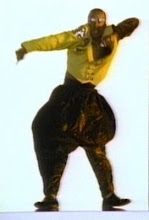
It's important to remember to MC Grammar loves you. MC Grammar has noticed your outrageous physical attractiveness, and also finds you funny and witty. MC Grammar doesn't mean to offend you or be a toff and don't forget, MC Grammar makes grammar mistakes all the times. If this blog really annoys you, but helps you just a smidgen to write a letter or impress someone you're trying to sleep with, then my massive pants are filled with funky joy.