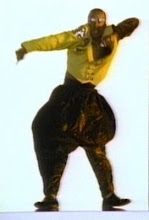
Friends, lovers, avid followers and solicitors of sexual favours. For years I have hidden behind my street name, MC Grammar, and you have patiently accepted this and referred to me by this name, even though in your heart of hearts you must have known that that was not the name that my smart and bold mama gave me.
So now it's time to reveal to you that my real name is James Prometheus Wiki III. The reason I want to reveal this to you is because that's what friends do when they have known each other for a while, and I trust you with this information.
Now, a few years ago I discovered that I had a real talent for helping people and giving them helpful life advice. Around the same time, I was becoming very savvy at the internet. I had added a number of helpful facts onto internet and I decided that it would be great if I had my own internet website that gave people facts. I commenced going about buying a domain name, and I thought it would be fantastic if I created a website that was like consulting an encyclopedia in real life! Therefore, I tried to buy a domain site called ‘wiki-pedia’. Imagine my shock when I discovered that the domain site ‘wikipedia.com’ had already been bought. I went away to try and deal with my anger, and after some self-reflection, I decided that my helpful site would be just as useful if I called it ‘Wiki-How’. To my frustration and rage, wikihow.com had also already been purchased.
Following this, I developed incontinence for a while. It was a terrible time, but I realised after a while that it was just psychological. I decided to create a website for people who had gone through the same struggle with their bladders, but then, to my utter devastation, I discovered that the domain site ‘wikileaks.com’ had also been bought. Why was it that the world was always one step ahead of me? Why was it that every time I had a vision of how I could change the world, someone else had already seen it, and made it their own?
Then something wonderful occurred to me. I realised that it wasn't important what I called my helpful website, as long as I was helping people with their problems.
With renewed zeal, I embarked on a very happy life of explaining grammar, and let me tell you, I have never looked back.
And with all of this cleared up, let's move on to the wonderful world of non-countable nouns.
Non-countable nouns, also known as uncountable nouns or mass nouns, are things that can't be divided into separate elements. In other words, they can't be 'counted'.
For example, instead of saying a milk, you should say a glass of milk, because even if you literally owned all the milk in the world, you still couldn't have a milk. That would be like having a dirt, or a pollen.
Examples of non-countable verbs are:
advice, information, news
furniture, luggage
rice, sugar, butter, water
electricity, gas,
money, currency
And if you don't have the specific words to describe the noun you are talking about, you can always just use some, any, little and much with non-countable nouns:I've got some money.
Have you got any rice?
I haven't got much advice for you
I've got a little money.
These are also known as quantifying adjectives, because they indicate amounts. Some other ways you can refer to a non-countable verb are:
A piece of news
A bottle of water
A grain of rice
We have now made some considerable progress in the world of non-countable nouns, which I am very happy about. I realise now that my role is to help with grammar, not to launch a multi-million dollar general help site that advices people on all manner of things. But to reminisce about that youthful dream I once had, let's appreciate these fun and cool girls as they help the world with its kissing.
Sunday, 31 July 2011

Monday, 18 July 2011
Definitely a post you should read
I feel shame. It's the kind of shame that you know you should have, and you attend years of cognitive therapy to see how irrational your shame is, but when you're lying in your four-poster bed in the dark, you can't help but feel like you're just a really a bad person.
You see, despite all my wonderful qualities, it is pretty often that I misspell the word definitely.
Yes, even me, who loves grammar so much that my children are named 'Suffix', 'Elipsis' and 'Dash' sometimes falters when I am called upon to remember whether you spell definitely or definitley.
The short story is it's definitely. You might think that that's confusing, because it's not like you say definit-elly, but you see, the e in definitely is silent. In this case, definite is the main part of the word, while -ly is the suffix.
A suffix is a group of letters that are at the end of a word to make a new word. The most common example of a suffix is the s that is added to the end of things, like cats, to indicate that something is plural.
Other examples of suffixes include:
Suffix Original Word Suffixed Word
en Eat Eaten
ing Sleep Sleeping
al accident accidental
able tax taxable
ly brother brotherly
ful forget forgetful
ly helpful helpfully
We have now learnt not only about prefixes but also suffixes, so to top all this off, let's listen to this rap that puts it all together:
You see, despite all my wonderful qualities, it is pretty often that I misspell the word definitely.
Yes, even me, who loves grammar so much that my children are named 'Suffix', 'Elipsis' and 'Dash' sometimes falters when I am called upon to remember whether you spell definitely or definitley.
The short story is it's definitely. You might think that that's confusing, because it's not like you say definit-elly, but you see, the e in definitely is silent. In this case, definite is the main part of the word, while -ly is the suffix.
A suffix is a group of letters that are at the end of a word to make a new word. The most common example of a suffix is the s that is added to the end of things, like cats, to indicate that something is plural.
Other examples of suffixes include:
Suffix Original Word Suffixed Word
en Eat Eaten
ing Sleep Sleeping
al accident accidental
able tax taxable
ly brother brotherly
ful forget forgetful
ly helpful helpfully
We have now learnt not only about prefixes but also suffixes, so to top all this off, let's listen to this rap that puts it all together:
Monday, 20 June 2011
An internet blog post about tautology
This is MC Grammar's sister, Bee-Rock.
![]()
Bee-Rock is a dancer. She loves hip-hop, jazz, contemporary and ballroom, and any other style of dance you can think of. But she has a problem. Every now and again, somebody utters the phrase 'I saw you dancing that dance last week.'
This phrase is what's known as a tautology. This makes Bee-Rock very annoyed. You see, Bee-Rock has no time for tautology. Sometimes it gets so bad that the only place she feels safe is on the dancefloor. She flees back to it and dances furiously, mascara-stained tears streaming down her face. 'No der I was '"dancing" a "dance"' she screams against the din of music to no one in particular. 'How else you do a dance?'
Tautology is when you say the same thing twice in different words. For example, the tiny little man is a tautology because it's unnecessary to say both 'tiny' and 'little'. Other examples of this are:
I'm going to raze this house to the ground.
When you threaten to raze something, it's pretty much assumed that you're going to raze it all the way to the ground.
The downstairs basement
Basements are always downstairs
One of the most common tautologies is terms like a free gift. This offender tends to come up in many varieties, such as:
A gift of wine on the house
The elephant was donated as a gift
Gifts and donations are always free, so this is where the tautology part comes in.
So do the right thing and try not to use tautologies – as Bee-Rock always says, the time you waste saying unnecessary things is time your could have spent dancing.

Bee-Rock is a dancer. She loves hip-hop, jazz, contemporary and ballroom, and any other style of dance you can think of. But she has a problem. Every now and again, somebody utters the phrase 'I saw you dancing that dance last week.'
This phrase is what's known as a tautology. This makes Bee-Rock very annoyed. You see, Bee-Rock has no time for tautology. Sometimes it gets so bad that the only place she feels safe is on the dancefloor. She flees back to it and dances furiously, mascara-stained tears streaming down her face. 'No der I was '"dancing" a "dance"' she screams against the din of music to no one in particular. 'How else you do a dance?'
Tautology is when you say the same thing twice in different words. For example, the tiny little man is a tautology because it's unnecessary to say both 'tiny' and 'little'. Other examples of this are:
I'm going to raze this house to the ground.
When you threaten to raze something, it's pretty much assumed that you're going to raze it all the way to the ground.
The downstairs basement
Basements are always downstairs
One of the most common tautologies is terms like a free gift. This offender tends to come up in many varieties, such as:
A gift of wine on the house
The elephant was donated as a gift
Gifts and donations are always free, so this is where the tautology part comes in.
So do the right thing and try not to use tautologies – as Bee-Rock always says, the time you waste saying unnecessary things is time your could have spent dancing.
Thursday, 9 June 2011
Sudden Adjectives: The words that action movies can't do without
MC Grammar loves action movies. All those explosions, high speed car chases, bombs, and even though walking away slowly from an explosion that is right behind you in real life would just be a sign that had been traumatised by violence, there's nothing quite like it when you're watching it in an action movie.
And one of the things I love the most about action movies is their names, like Dragon Eyes, Sudden Death, Street Fighter, Hard Target, Double Target, and Knockaround Guys. All these titles have something in common – they all have adjectives in them.
There's nothing I love more than an adjective-noun action move. When you see one of the these, you know that you're going to get first-class action on your wide-screen TV, and almost definitely the martial art stylings of Jean-Claude Van Damme will be in it.
The role of adjectives is to give more information about the thing you are talking about. The most common form of an adjective is the attributive adjective. There are difference kinds of adjectives. There are attributive adjectives, meaning that it tells us more about the the main noun or object in a sentence:
It was an interesting animal
An adjective can be predicative, meaning it can be the predicate in a sentence:
This wig is glossy
And adjective can be post-positive, which means that it appears after the noun, like:
There was food aplenty, but it was of the worst kind imaginable
Or an adjective can be substantive, which is when an adjective is used like a noun:

And one of the things I love the most about action movies is their names, like Dragon Eyes, Sudden Death, Street Fighter, Hard Target, Double Target, and Knockaround Guys. All these titles have something in common – they all have adjectives in them.
There's nothing I love more than an adjective-noun action move. When you see one of the these, you know that you're going to get first-class action on your wide-screen TV, and almost definitely the martial art stylings of Jean-Claude Van Damme will be in it.
The role of adjectives is to give more information about the thing you are talking about. The most common form of an adjective is the attributive adjective. There are difference kinds of adjectives. There are attributive adjectives, meaning that it tells us more about the the main noun or object in a sentence:
It was an interesting animal
An adjective can be predicative, meaning it can be the predicate in a sentence:
This wig is glossy
And adjective can be post-positive, which means that it appears after the noun, like:
There was food aplenty, but it was of the worst kind imaginable
Or an adjective can be substantive, which is when an adjective is used like a noun:
The good, the bad, and the ugly.
A good rule to follow is to avoid using too many adjectives in a sentence. For example, look at this passage from 'New Moon', by Stephanie Meyer:
I woke with a start – my eyelids popping open wide – and gasped. Dull, grey light, the familiar light of an overcast morning, took the place of the blinding sun in my dream.
Woah, Stephanie Meyer, slow down there! There's a shitload of adjectives in your story and it's making your story look weird!
Also, you run the risk of tautology when you use too many adjectives. For example:
The wide open canyon.
Obviously a wide canyon is going to be open.
I was in close proximity to the lion.
All proximity is close.
I was in close proximity to the lion.
All proximity is close.
Good God – where would we be without adjectives! Imagine if some of the greatest movies didn't have adjectives to emphasise their awesomeness? We would have action movies with names like 'Death that is going to happen now', 'More Than One Target' and 'Target that I keep missing'. As this would not do justice to the man that inspires all these movies, Jean-Claude Van Damme. Let's pay homage to him now.

Friday, 20 May 2011
Hyphen use and other sex tips
As you probably know, MC Grammar is as much into physical love as he is into lingual love.
And when it comes to the world of punctuation, there's no sign that imitates the act of physical love more than the hyphen, which helps bring words together as close as they can be, whilst still retaining their individuality.
Hyphens are used to combine words. They are used for:
I was laid off
You don't need to bother using a hyphen, because there's no other way that 'laid off' could be interpreted. But you might think about using a hyphen in this sentence:
When I got laid off my face had an outbreak of acne
Here, 'laid off' could mixed up with the term 'off my face' so to make it clear what part of the sentence 'off' belongs to, and things get confusing, so it would help to use a hyphen and say 'laid-off' instead.
When I got laid-off my face had an outbreak of acne
If you're confused about where the hyphen is on your computer, it is on the bottom row here. Try it out for maximum hyphen fun!

And when it comes to the world of punctuation, there's no sign that imitates the act of physical love more than the hyphen, which helps bring words together as close as they can be, whilst still retaining their individuality.
Hyphens are used to combine words. They are used for:
- prefixes, such as 'pre' (e.g. pre-paid)
- doubled-up vowels, (e.g. de-emphasised)
- clarifying meaning (e.g. to distinguish them from established words, such as post-war)
I was laid off
You don't need to bother using a hyphen, because there's no other way that 'laid off' could be interpreted. But you might think about using a hyphen in this sentence:
When I got laid off my face had an outbreak of acne
Here, 'laid off' could mixed up with the term 'off my face' so to make it clear what part of the sentence 'off' belongs to, and things get confusing, so it would help to use a hyphen and say 'laid-off' instead.
When I got laid-off my face had an outbreak of acne
If you're confused about where the hyphen is on your computer, it is on the bottom row here. Try it out for maximum hyphen fun!
Monday, 9 May 2011
Prefixes: the fuel belt of your words
Recently, MC Grammar agreed to participate in a 10 kilometre marathon.
There's nothing I enjoy more than a marathon. The way your heart skips and pulses, the way the fresh air rushes through your lungs, the way your parachute pants flap in the wind; but I also respect the harsh deal that nature strikes with us pathetic, fallible humans and our constant need for water, so I never attempt a marathon without the use of my handy fuel belt.
 As you can see, the fuel belt provides me with two water bottles at the front, so I can have a quick burst of water whenever I'm trying to break through the pain barrier.
And just like my fuel belt, a prefix is something that attached to the front of another word to add something to it.
A prefix is attached to the start of a word, and partly indicates its meaning. Common prefixes include anti- (against), co- (with), mis- (wrong, bad), and trans- (across).
Most prefixes are generally connected to the rest of the word, such as mistake, transvestite and disbelief. However, you need to use a hyphen between the prefix and the rest of the word in these situations:
So as you can see, prefixes are the fuel you need to refine or change a word.
MC Grammar out!
There's nothing I enjoy more than a marathon. The way your heart skips and pulses, the way the fresh air rushes through your lungs, the way your parachute pants flap in the wind; but I also respect the harsh deal that nature strikes with us pathetic, fallible humans and our constant need for water, so I never attempt a marathon without the use of my handy fuel belt.
And just like my fuel belt, a prefix is something that attached to the front of another word to add something to it.
A prefix is attached to the start of a word, and partly indicates its meaning. Common prefixes include anti- (against), co- (with), mis- (wrong, bad), and trans- (across).
Most prefixes are generally connected to the rest of the word, such as mistake, transvestite and disbelief. However, you need to use a hyphen between the prefix and the rest of the word in these situations:
- the rest of the word attached begins with a capital letter, as with anti-Stalin, or
- the same vowel as the prefix ends in, as with: anti-inflationary, de-escalate, micro-organism.
So as you can see, prefixes are the fuel you need to refine or change a word.
MC Grammar out!
Tuesday, 3 May 2011
First Blood: Words on the brink of extinction
BREAKING GRAMMAR NEWS: Reading University (UK) researchers revealed that they have identified the oldest English words, which are tens of thousands of years old.
To do this, they had to what always has to be done in situations such as these: they built a super computer.
Most of the languages from Europe to Asia fall under the category of Indo-European languages, and the vocal sounds they use to express a certain concept are very similar. This means that when new words arise, you can spot them because they don't sound similar. So using their super computer, the boffins at Reading University could work out the age of a word.
'You type in a date in the past or in the future and it will give you a list of words that would have changed going back in time or will change going into the future,' Mark Pagel, an evolutionary biologist at the University of Reading told BBC News.
'From that list you can derive a phrasebook of words you could use if you tried to show up and talk to, for example, William the Conqueror.'
The words they found that had been around for the longest were I, we, two and three. MC Grammar can't be sure why two and three were so popular back then – maybe things only came in sets of two and three – we will never know.
They could also predict what words will be going out of style very soon. They were squeeze, guts, stick and bad as probable first casualties.
'We use a computer to fit a range of models that tell us how rapidly these words evolve,and we can estimate the rates at which these things are replaced through time'.
And now, to tip our grammar hats to these dying words, we can do no better than to celebrate one of them by looking back at the glorious hey day of the word bad, with a cameo by Michael Jackson.
To do this, they had to what always has to be done in situations such as these: they built a super computer.
Most of the languages from Europe to Asia fall under the category of Indo-European languages, and the vocal sounds they use to express a certain concept are very similar. This means that when new words arise, you can spot them because they don't sound similar. So using their super computer, the boffins at Reading University could work out the age of a word.
'You type in a date in the past or in the future and it will give you a list of words that would have changed going back in time or will change going into the future,' Mark Pagel, an evolutionary biologist at the University of Reading told BBC News.
'From that list you can derive a phrasebook of words you could use if you tried to show up and talk to, for example, William the Conqueror.'
The words they found that had been around for the longest were I, we, two and three. MC Grammar can't be sure why two and three were so popular back then – maybe things only came in sets of two and three – we will never know.
They could also predict what words will be going out of style very soon. They were squeeze, guts, stick and bad as probable first casualties.
'We use a computer to fit a range of models that tell us how rapidly these words evolve,and we can estimate the rates at which these things are replaced through time'.
And now, to tip our grammar hats to these dying words, we can do no better than to celebrate one of them by looking back at the glorious hey day of the word bad, with a cameo by Michael Jackson.
Subscribe to:
Posts (Atom)