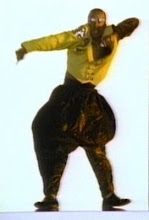
I feel shame. It's the kind of shame that you know you should have, and you attend years of cognitive therapy to see how irrational your shame is, but when you're lying in your four-poster bed in the dark, you can't help but feel like you're just a really a bad person.
You see, despite all my wonderful qualities, it is pretty often that I misspell the word definitely.
Yes, even me, who loves grammar so much that my children are named 'Suffix', 'Elipsis' and 'Dash' sometimes falters when I am called upon to remember whether you spell definitely or definitley.
The short story is it's definitely. You might think that that's confusing, because it's not like you say definit-elly, but you see, the e in definitely is silent. In this case, definite is the main part of the word, while -ly is the suffix.
A suffix is a group of letters that are at the end of a word to make a new word. The most common example of a suffix is the s that is added to the end of things, like cats, to indicate that something is plural.
Other examples of suffixes include:
Suffix Original Word Suffixed Word
en Eat Eaten
ing Sleep Sleeping
al accident accidental
able tax taxable
ly brother brotherly
ful forget forgetful
ly helpful helpfully
We have now learnt not only about prefixes but also suffixes, so to top all this off, let's listen to this rap that puts it all together:
Showing posts with label Prefixes. Show all posts
Showing posts with label Prefixes. Show all posts
Monday, 18 July 2011

Friday, 20 May 2011
Hyphen use and other sex tips
As you probably know, MC Grammar is as much into physical love as he is into lingual love.
And when it comes to the world of punctuation, there's no sign that imitates the act of physical love more than the hyphen, which helps bring words together as close as they can be, whilst still retaining their individuality.
Hyphens are used to combine words. They are used for:
I was laid off
You don't need to bother using a hyphen, because there's no other way that 'laid off' could be interpreted. But you might think about using a hyphen in this sentence:
When I got laid off my face had an outbreak of acne
Here, 'laid off' could mixed up with the term 'off my face' so to make it clear what part of the sentence 'off' belongs to, and things get confusing, so it would help to use a hyphen and say 'laid-off' instead.
When I got laid-off my face had an outbreak of acne
If you're confused about where the hyphen is on your computer, it is on the bottom row here. Try it out for maximum hyphen fun!

And when it comes to the world of punctuation, there's no sign that imitates the act of physical love more than the hyphen, which helps bring words together as close as they can be, whilst still retaining their individuality.
Hyphens are used to combine words. They are used for:
- prefixes, such as 'pre' (e.g. pre-paid)
- doubled-up vowels, (e.g. de-emphasised)
- clarifying meaning (e.g. to distinguish them from established words, such as post-war)
I was laid off
You don't need to bother using a hyphen, because there's no other way that 'laid off' could be interpreted. But you might think about using a hyphen in this sentence:
When I got laid off my face had an outbreak of acne
Here, 'laid off' could mixed up with the term 'off my face' so to make it clear what part of the sentence 'off' belongs to, and things get confusing, so it would help to use a hyphen and say 'laid-off' instead.
When I got laid-off my face had an outbreak of acne
If you're confused about where the hyphen is on your computer, it is on the bottom row here. Try it out for maximum hyphen fun!
Monday, 9 May 2011
Prefixes: the fuel belt of your words
Recently, MC Grammar agreed to participate in a 10 kilometre marathon.
There's nothing I enjoy more than a marathon. The way your heart skips and pulses, the way the fresh air rushes through your lungs, the way your parachute pants flap in the wind; but I also respect the harsh deal that nature strikes with us pathetic, fallible humans and our constant need for water, so I never attempt a marathon without the use of my handy fuel belt.
 As you can see, the fuel belt provides me with two water bottles at the front, so I can have a quick burst of water whenever I'm trying to break through the pain barrier.
And just like my fuel belt, a prefix is something that attached to the front of another word to add something to it.
A prefix is attached to the start of a word, and partly indicates its meaning. Common prefixes include anti- (against), co- (with), mis- (wrong, bad), and trans- (across).
Most prefixes are generally connected to the rest of the word, such as mistake, transvestite and disbelief. However, you need to use a hyphen between the prefix and the rest of the word in these situations:
So as you can see, prefixes are the fuel you need to refine or change a word.
MC Grammar out!
There's nothing I enjoy more than a marathon. The way your heart skips and pulses, the way the fresh air rushes through your lungs, the way your parachute pants flap in the wind; but I also respect the harsh deal that nature strikes with us pathetic, fallible humans and our constant need for water, so I never attempt a marathon without the use of my handy fuel belt.
And just like my fuel belt, a prefix is something that attached to the front of another word to add something to it.
A prefix is attached to the start of a word, and partly indicates its meaning. Common prefixes include anti- (against), co- (with), mis- (wrong, bad), and trans- (across).
Most prefixes are generally connected to the rest of the word, such as mistake, transvestite and disbelief. However, you need to use a hyphen between the prefix and the rest of the word in these situations:
- the rest of the word attached begins with a capital letter, as with anti-Stalin, or
- the same vowel as the prefix ends in, as with: anti-inflationary, de-escalate, micro-organism.
So as you can see, prefixes are the fuel you need to refine or change a word.
MC Grammar out!
Wednesday, 20 April 2011
MC Grammar's grammar mistakes
Let's get something clear: you might think that MC Grammar is infallible, but let me tell you, I am just as falliable as the next person. Take, for example, MC Grammar's constant and unregulated grammar, spelling and punctuation mistakes.
And make no mistake, there can be no doubt that there will be even more mistakes committed in the future by MC Grammar. Even Emily Bronte, one of the greatest writers of all time, sometimes misspelt her very own sisters' names, and they were pretty much the only people she hung out with. So I guess what I'm trying to say is that even geniuses have their off days.
And make no mistake, there can be no doubt that there will be even more mistakes committed in the future by MC Grammar. Even Emily Bronte, one of the greatest writers of all time, sometimes misspelt her very own sisters' names, and they were pretty much the only people she hung out with. So I guess what I'm trying to say is that even geniuses have their off days.
So, without further ado, here's a list of the mistakes that MC Grammar has committed on this very blog. Enjoy!
- In my blog profile, I put a dash, instead of an en-dash
- In 'Many funky uses of the apostrophe', I wrote 'rules IF' instead of 'rules of''
- In 'The Semi-Colon: What has it done for you latley?' I wrote 'People to avoid it', instead of 'people TEND to avoid it'.
- Also in 'The Semi-colon', I wrote 'I can't go carry on with this charade any more'. It's pretty obvious what was going on there—I was being a verb ho.
- In 'Attack of the similar words!' I wrote 'Probably twins, not clones, or a glitch in the matrix' — that was a very confusing second comma, and it scrambled the whole meaning of my sentence.
- In 'Cliffhanger! Pulling the dangling participle back from the edge of misuse', I wrote 'this is were the participle comes in', using 'were' instead of 'where' That was a pretty embarrassing mistake.
- In 'Commas of Mass Destruction, Part One', I wrote 'the comma in it's mutant from' not 'mutant form'.
- In 'Commas of Mass Destruction Part Two', I wote 'Oxford Comma' in capitals. Why? Thems aren't proper nouns!
- In 'Who's laughing now? The difference between whose and who's', I wrote 'I just asked because it thought it might get an interesting answer'
Subscribe to:
Posts (Atom)