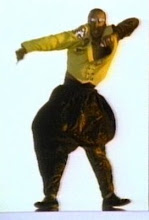
Throughout history, many famous artists have painted over their previous work to make a whole new painting. This makes sense, since canvases were, and are still, pretty expensive, and as MC Grammar knows all too well, sometimes you'll be working day and night on a piece of art – in my case, this voluminous blog – and it will be only halfway through that you'll realise that what you're doing is shit.
For example, this is a very beautiful portrait painted Frida Kahlo in the 1930s.
But what most people don't know is that X-ray images have shown that Kahlo was originally painting this:
Which IS good, but I'm sure you'll agree, isn't as good as what she ended up with. And the painting by Botticelli, which is generally known to look like this:
Is in fact painted over an earlier draft that looks like this:
And just like these examples, it has been recently discovered that a lost Leonardo da Vinci painting has been hiding behind a fresco at Florence’s town hall.
The painting, which is titled ‘The Battle of Anghiari’, is believed to have been hidden for the last five centuries. In 1504, da Vinci worked in the Hall of Five Hundred in the Palazzo Vecchio and managed to complete only the centrepiece of his work. After 1555, the palace room undertook renovations, and the painting was covered by other stuff, which we now realise is a piece of total crap.
Here's a bit of the uncovered painting:
Anyway, here's where shit gets seriously crazy. When Leonardo da Vinci makes it to the papers. When you start a sentence with 'da Vinci', you don't have to start the sentence with a capital letter. Here's an example.
In this case, because 'da Vinci' is a surname that starts with a lower case letter, not an uppercase letter. You can't just make it an uppercase letter because you're starting a new sentence - in this case the fact that da Vinci's name starts with a lowercase letter overrides the fact that sentences are meant to start with an uppercase letter.
I'm sure that I don't have to tell you that this is some crazy shit. But don't be too frightened by this, just let this fact wash over you like a big wave. After all, da Vinci created some pretty dope stuff, like this business:
MC Grammar loves action movies. All those explosions, high speed car chases, bombs, and even though walking away slowly from an explosion that is right behind you in real life would just be a sign that had been traumatised by violence, there's nothing quite like it when you're watching it in an action movie.
And one of the things I love the most about action movies is their names, like Dragon Eyes, Sudden Death, Street Fighter, Hard Target, Double Target, and Knockaround Guys. All these titles have something in common – they all have adjectives in them.
There's nothing I love more than an adjective-noun action move. When you see one of the these, you know that you're going to get first-class action on your wide-screen TV, and almost definitely the martial art stylings of Jean-Claude Van Damme will be in it.
The role of adjectives is to give more information about the thing you are talking about. The most common form of an adjective is the attributive adjective. There are difference kinds of adjectives. There are attributive adjectives, meaning that it tells us more about the the main noun or object in a sentence:
It was an interesting animal
An adjective can be predicative, meaning it can be the predicate in a sentence:
This wig is glossy
And adjective can be post-positive, which means that it appears after the noun, like:
There was food aplenty, but it was of the worst kind imaginable
Or an adjective can be substantive, which is when an adjective is used like a noun:
The good, the bad, and the ugly.
A good rule to follow is to avoid using too many adjectives in a sentence. For example, look at this passage from 'New Moon', by Stephanie Meyer:
I woke with a start – my eyelids popping open wide– and gasped. Dull, grey light, the familiar light of an overcast morning, took the place of the blinding sun in my dream.
Woah, Stephanie Meyer, slow down there! There's a shitload of adjectives in your story and it's making your story look weird!
Also, you run the risk of tautology when you use too many adjectives. For example:
The wide open canyon.
Obviously a wide canyon is going to be open.
I was in close proximity to the lion.
All proximity is close.
Good God – where would we be without adjectives! Imagine if some of the greatest movies didn't have adjectives to emphasise their awesomeness? We would have action movies with names like 'Death that is going to happen now', 'More Than One Target' and 'Target that I keep missing'. As this would not do justice to the man that inspires all these movies, Jean-Claude Van Damme. Let's pay homage to him now.
Things are complicated in the modern world, just as they are in the world of grammar. It's a medieval battlefield, except instead of fighting with mallets and poison arrows, the fighting is done with sales targets and active selling-point skills. And just like in business, 'developing' happens in the world of grammar. This is where the participle comes in.
A participle is a verb, developed. Participles take two forms: past participles and present participles. Present participles are all those words like 'running', 'working', 'talking', etc. Past participles are all those words like 'brought', 'cooked', and 'mashed', and other crazy irregular verbs like 'went', 'drove' and 'ate'.
Participles are those things that you just intrinsically know about, but may not have known the exact name for them. But hold on, because we need to take participles to the next level now. Because participles aren't just verbs wearing outfits appropriate for the occasion, they are more like grammar-grenades. If you put them in the wrong place, everything flies apart. Look at the example of the dangling participle. A dangling participle is a verb that has been tacked on to the beginning or end of a sentence, and doesn't 'belong' to anything.
Take for this sentence, for example.
Leaning out the car window, the air was warm and fragrant. The problem here is that the only subject, or 'thing that the actions are being done to', is the air. We know that the thing that is leaning out of the car window is a person, but they haven't been written into the sentence. I'll write more about subjects and complete sentences next time, but for now, let's just say that in this case, the participle 'leaning', is not being 'done' by anyone, which means that technically, it's the air that is leaning out of the car window.
But before you start panicking and counting up all the times you hung participles on the edges of sentences like so many ragged christmas trees, don't panic, because there are some times when dangling participles are accepted as standard ways of expressing the way the speaker feels, even if that speaker is not mentioned in the sentence. For example:
Speaking of kumquat farming, Jenny is running her own plantation now. Here, Jenny is the subject of the sentence, but the participle 'speaking' is not being done by her. We understand that the speaker is the person doing the 'speaking'.
But a dangling modifier is very precise, and you can't take them for granted. For example, in the sentence, 'Ranting, she stormed out of the room' it makes sense here that the ranting is being done by the woman. However, if you say 'She stormed out of the room ranting', it means the room was doing the ranting.
There can be no doubt, it's hard to fight your way through the grammar jungle. But not impossible. That's why MC Grammar is here to help. To finish up, here's a clip that reflects on how a dangling participle must feel: so very lonely.
STOP: grammar time! I'm just an ordinary person who loves technicolour balloon pants and grammar. I also love you and that cute thing you do with your hair when you're nervous – and because I think you're so awesome, I'm here to add to your awesomeness with amazing grammar skills. Remember the Planeteers? You will be like all of them rolled into one when you combine with the magnanimous might of grammar!