Search This Blog

Friday, 20 May 2011

Hyphen use and other sex tips

As you probably know, MC Grammar is as much into physical love as he is into lingual love.

And when it comes to the world of punctuation, there's no sign that imitates the act of physical love more than the hyphen, which helps bring words together as close as they can be, whilst still retaining their individuality.

Hyphens are used to combine words. They are used for:
  • prefixes, such as 'pre' (e.g. pre-paid)
  • doubled-up vowels, (e.g. de-emphasised)
  • clarifying meaning (e.g. to distinguish them from established words, such as post-war)
The general rule is that you should only use hyphens in the case where there may be more than one way that your sentence could be interpreted. For example, in the sentence

I was laid off

You don't need to bother using a hyphen, because there's no other way that 'laid off' could be interpreted. But you might think about using a hyphen in this sentence:

When I got laid off my face had an outbreak of acne

Here, 'laid off' could mixed up with the term 'off my face' so to make it clear what part of the sentence 'off' belongs to, and things get confusing, so it would help to use a hyphen and say 'laid-off' instead.

When I got laid-off my face had an outbreak of acne

If you're confused about where the hyphen is on your computer, it is on the bottom row here. Try it out for maximum hyphen fun!

Monday, 9 May 2011

Prefixes: the fuel belt of your words

Recently, MC Grammar agreed to participate in a 10 kilometre marathon.

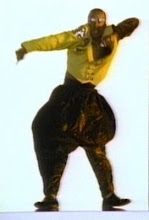
There's nothing I enjoy more than a marathon. The way your heart skips and pulses, the way the fresh air rushes through your lungs, the way your parachute pants flap in the wind; but I also respect the harsh deal that nature strikes with us pathetic, fallible humans and our constant need for water, so I never attempt a marathon without the use of my handy fuel belt.


As you can see, the fuel belt provides me with two water bottles at the front, so I can have a quick burst of water whenever I'm trying to break through the pain barrier.

And just like my fuel belt, a prefix is something that attached to the front of another word to add something to it.

A prefix is attached to the start of a word, and partly indicates its meaning. Common prefixes include anti- (against), co- (with), mis- (wrong, bad), and trans- (across).

Most prefixes are generally connected to the rest of the word, such as mistake, transvestite and disbelief. However, you need to use a hyphen between the prefix and the rest of the word in these situations:

  • the rest of the word attached begins with a capital letter, as with anti-Stalin, or

  • the same vowel as the prefix ends in, as with: anti-inflationary, de-escalate, micro-organism.

So as you can see, prefixes are the fuel you need to refine or change a word.

MC Grammar out!

Tuesday, 3 May 2011

First Blood: Words on the brink of extinction

BREAKING GRAMMAR NEWS: Reading University (UK) researchers revealed that they have identified the oldest English words, which are tens of thousands of years old.

To do this, they had to what always has to be done in situations such as these: they built a super computer.

Most of the languages from Europe to Asia fall under the category of Indo-European languages, and the vocal sounds they use to express a certain concept are very similar. This means that when new words arise, you can spot them because they don't sound similar. So using their super computer, the boffins at Reading University could work out the age of a word.

'You type in a date in the past or in the future and it will give you a list of words that would have changed going back in time or will change going into the future,' Mark Pagel, an evolutionary biologist at the University of Reading told BBC News.

'From that list you can derive a phrasebook of words you could use if you tried to show up and talk to, for example, William the Conqueror.'

The words they found that had been around for the longest were  I, we, two and three. MC Grammar can't be sure why two and three were so popular back then – maybe things only came in sets of two and three – we will never know.

They could also predict what words will be going out of style very soon. They were squeeze, guts, stick and bad as probable first casualties.

'We use a computer to fit a range of models that tell us how rapidly these words evolve,and we can estimate the rates at which these things are replaced through time'.

And now, to tip our grammar hats to these dying words, we can do no better than to celebrate one of them by looking back at the glorious hey day of the word bad, with a cameo by Michael Jackson.  


Wednesday, 20 April 2011

MC Grammar's grammar mistakes

Let's get something clear: you might think that MC Grammar is infallible, but let me tell you, I am just as falliable as the next person. Take, for example, MC Grammar's constant and unregulated grammar, spelling and punctuation mistakes.

And make no mistake, there can be no doubt that there will be even more mistakes committed in the future by MC Grammar. Even Emily Bronte, one of the greatest writers of all time, sometimes misspelt her very own sisters' names, and they were pretty much the only people she hung out with. So I guess what I'm trying to say is that even geniuses have their off days.

So, without further ado, here's a list of the mistakes that MC Grammar has committed on this very blog. Enjoy!

  • In my blog profile, I put a dash, instead of an en-dash


  • Also in 'The Semi-colon', I wrote 'I can't go carry on with this charade any more'. It's pretty obvious what was going on there—I was being a verb ho.

  • In 'Attack of the similar words!' I wrote 'Probably twins, not clones, or a glitch in the matrix' — that was a very confusing second comma, and it scrambled the whole meaning of my sentence.


So there you are: some of the outrageous mistakes MC Grammar himself has made. But just like you, I'm not going to fall apart over these mistakes, this is what LIFE is all about—taking the good with the bad, the ill with the wack.

Tuesday, 29 March 2011

If I were you, I'd read this post on subjunctive verbs

Have you ever noticed that sometimes people say things like 'If I were able to, I would dance all night', or 'If I were president, I'd make it illegal to chew loudly', and you're all like 'hang on friend, why are you talking in the past tense? Don't you mean "If I was able to, I would dance all night", and "If I was President, I'd make it illegal to chew loudly"?'

And then they say 'no way! I mean "if I were able to", because I'm talking in the subjunctive.'

The subjunctive is a verb form that you use when you are talking about scenarios that are not definitely going to happen. 

For example, instead of saying 'If I was God', you would generally say 'If I were God', because you're probably not going to become God anytime soon.

The structure of the subjunctive is easy. For all verbs except the past tense of be, the subjunctive is the same as the bare infinitive (infinitive without "to"):

be (past)               be (present)                        Other verbs, (i.e to swim)


I were                    I be                                     I swim

you were               you be                                  you swim

he, she, it were     he, she, it be                        he, she, it swim

we were                we be                                 we swim

 you were                you be                               you swim

they were              they be                                 they swim


As you can see, the subjunctive does not change according to person (I, you, he etc).

Here are some examples with a subjunctive verb:


The farmer insists that the barn be locked at night.

The doctor recommended that he join a gym.

It is essential that we leave as soon as possible

It was necessary that every student submit an essay by Friday

And now, a subjunctive treat for all my grammar brothers and sisters, an amazing home made video by two very clever cats, all about the Spanish subjunctive. It's a bit off topic for us, since I usually talk about Spanish grammar on my other blog 'Señor Gramática - Basta!, Es el momento de la gramática!' but who can resist when these two bright students sing 'And I'm like, Present, Present Subjunctive'


Friday, 18 March 2011

Who's laughing now? The difference between whose and who's

A while ago MC Grammar got addicted to wiki answers. It's hard to say what it was about this particular interactive social media that I fell for: perhaps it was the satisfying aspect of asking a question, then an anonymous person taking the time to read over my question, then answer it seriously. After a few months, wiki answers was being taken over more and more by people who didn't believe in dinosaurs, so I just lost interest and took up nature photography instead. But back when I was having good times on wiki answers, sometimes I liked to mix it up a little bit and ask unusual questions. Once, during a late night session on wiki answers, I asked Whose hands are these? It didn't really mean anything, I just asked because it thought it might get an interesting answer. And an interesting answer it did receive, as the response I received back was: These are the hands of Banquo. Thank you, anonymous poster, I enjoyed this answer and its fun approach. I would like to see more of these on the internet.

And this brings us to our post for today, the difference between whose and who. The difference between these two words is a little bit like the difference between your and you're. They sound similar, but they mean very different things.

Always remember that:

Who's = 'who is'

Who's at the door?

Whose = possessive

Whose socks are these?

With the knowledge and understanding of these two words added to the stainless steel toolbox of your grammar skills, you will be able to construct the ultimate spice rack of grammar.

Monday, 28 February 2011

'Commadore Norrington, my effects please': The difference between affect and effect

The difference between affect and effect has confused more than a few people.  And make no mistake, sometimes even MC Grammar can end up throwing himself on his four-poster bed, howling in frustration at this very tricky area of grammar.

But lucky for us, the difference between affect and effect is a lot simpler than you might think. The thing is, effect and affect are homonyms, which means that even though they sound the same, they have different meanings. Read on, grammar children.

Affect means:

1. To have an influence or cause a change in something

Too much sunlight affected the quality of the photograph

2. To act on the emotions of, to touch, to move.

The arguments and fighting affected me badly

3. To attack or infect

Rabies affects the brain


Effect, on the other hand, means:

1. A result

The drugs took effect immediately


There was more positive information available about immigration, effecting a change attitudes towards immigrants.

2. The power to produce an outcome or achieve a result

The president's threats to kill everyone had no effect on the protesters

3. Something that produces a specific impression, or supports a general design or intention:

The fireworks were the best effects of the concert

If you ever get lost, there's a handy way of remembering the difference. In  the movie 'Pirates of the Caribbean', Captain Jack Sparrow has managed to get off from being arrested.  Demanding his stuff back, he says: 'Commodore Norrington, my effects please, and my hat'. When Sparrow asks for his effects he means his sword, his compass, and his belt. These are his effects, meaning the things that make him Captain Jack Sparrow. Your effects are the things that add a little something to the occasion, which is why fireworks are effects, or special animation techniques in a movie are effects.