Search This Blog

Saturday, 12 February 2011

Everything's not going to be alright

From a fan:

Dear MC Grammar. What's your position on owning and keeping firearms in the home?

Dear fan,

Firstly, thanks for writing. And thanks for asking this important question. What is my position on firearms in the home? Well, it shouldn't come as a surprise to anyone that I am very pro-firearms. I believe that every home should have two or three fully-loaded firearms, and that these should be placed within reaching distance of your bed, or wherever you sleep at night. If you have a habit of going to the bathroom during the night, and your bathroom is not close to where you sleep, such as in the case where you don't have a walk-in wardrobe, you should also keep a gun under your bathroom sink, or hanging from a shower curtain.

But the thing about this is that these firearms should only be for one specific purpose – to fight off incorrectly used words.

That's right, even in your own home, late at night when you are just relaxing with your loved ones, among your own hard-earned possessions, words that are not actually words can suddenly be breaking through your front window, traumatising your children and making love to your wife. What are you going to do when that happens? Are you going to just sit there and let the scene burn into your retinas? Or are you going to pull out your weapon and defend your loved ones like a warrior!?

Of course, by 'weapon', I mean your knowlege of grammar, and by 'firearm', I mean your astute oneness with language. And nowhere are these devices self-defense needed more than in the case of the confusion surrounding the words alright and all right.

A lot of people are confused about what the difference is between alright and all right. Luckily, this is a pretty easy problem to sort out, because alright is not a real word, in the same vein that 'alot' is not a word.

The best thing to do here is to remember this saying that Bill Walsh penned in his book, 'Lapsing into a Comma': 'alright is not all right'

Snap, Bill Walsh.

And don't forget, grammar children, always keep your weapons of grammar-knowledge loaded, and in an easy-to-reach place around the house.

Wednesday, 26 January 2011

Dr Whom and the attack of the archaic language

Try to get your head around this: scientists believe that there was a time when neanderthals and modern humans existed at the same time. Here's a picture comparing a modern human and a neanderthal.


But the neanderthals ended up dying out for some reason. We can't be sure what happened to them (although some evidence suggests that we ate them) but what we can be sure of is that the period of co-existence must have been a pretty crazy time for neanderthals and modern humans alike. They probably spent their whole day just staring at each other, thinking 'wow, you're sort of like me, but at the same time, you're not' Maybe modern humans just ended up eating the neanderthals just to deal with the craziness of the situation.

But what you don't even realise, grammar brothers and sisters, is that we are living in just as crazy a time right now, with the co-existence of the words who and whom.

As you might know, some of us have the idea that 'whom' is the more correct version of who. This is not true. Whom and who have different functions, and back in their glorious heyday they lived side by side, two versions of the same species.

Traditionally, whom was used if you were referring to the object of a sentence, for example:

He is the one to whom I owe my life.

If you are referring to the subject of a dependant or a ('subordinate') clause then you would use 'who'

He's just a great guy who cares about safety around the home.

But stop right there. Before you log off your computer and run out into the streets, throwing out 'whom' in everything you say without a care for who can hear you, let me explain something. For a long time, the use of 'whom' has been getting used less and less, making it archaic. This means that it has fallen out of use so much that it's no longer the right way to say something, and in most cases where you would have said 'whom' fifty years ago, it is now correct to say 'who'.

You might respond to this in horror, you might say, 'but just because people don't know how to use grammar properly doesn't mean that we should just lay down and die like dogs'. But the thing is, language changes all the time. In old English, spoken 1000 years ago, the word for 'who' was 'hwa'. Imagine how pissed off people back then must have been when all those uneducated punks, with their ridiculously long trendy cloth shoes, started saying who instead? If microsoft word had existed back then, it would have immediately flagged who as a misspelling, but after people had been saying it for a few years, everyone just gave up and started saying who instead.

And the same goes for whom. In 1989, the Oxford English Dictionary printed for the first time that whom was 'no longer current in natural colloquial speech', and they were right. In most cases, who is now used. You can still use whom in the traditional way, but if you do, you will no longer be speaking what is known as 'plain' English or 'colloquial' English. You'll be speaking using archaic words out of context, and that's just as incorrect as using the wrong grammar or the wrong tense, so what's the point of that?

There is, however, one use of whom that is still alive and kicking is when it comes after a preposition in more formal language. For example:

To whom it may concern

To whom have you been speaking?

With whom will we be coming to the meeting?

Of course, in these cases, you could always say something like 'who have you been speaking with?' or 'who will we be coming to the meeting with?' and it would be just as correct. That's the beauty of language – there's more than one way of doing things.

So what did happen to our neanderthal brothers and sisters? Well, there's not a lot of scientific evidence to back me up, but I like to think that neanderthals and modern humans put aside their differences and their animal skins and just got freaky with each other, leading their DNA to be incorporated into ours.  But there are other dreamers like me – enjoy this montage from the movie 'Clan of the Cave Bear', where an early modern human is adopted and lives with neanderthals.

Tuesday, 18 January 2011

MC Grammar, what's the deal with you?

I can hear you asking this question. You want to know how I got like this, right? You want to know how I became an amazing, grammar-knowing, language-loving, word-saying type of guy. Well, let me tell you, it runs in the family.

Recently I found a whole pile of my mother's letters, dated from 1980 to 1982. She died a few years ago, so I took them home to read them and hear what she was up to in the early 80's, apart from having the perm of a god. And let me tell you, these letters revealed something fascinating about her.


My mother had seriously amazing grammar and punctuation skills, probably even better than MC Grammar.

So that's the deal about me, I got it from my momma.

Sunday, 19 December 2010

'A' and 'An': the blog post we had to have.

I would like to apologise to you, my multi-talented and sexy readers. The last couple of months have been lost time  –  they have been snatched away, never to be rescued from the jaws of the past. But believe me when I say it couldn't be helped. You see, I bought a trampoline.

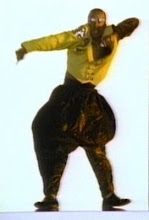
Who knew how much joy you could get out of springing into the air and spreading your legs as wide as they can go, then feeling the air running through your hair as you plummet back down to earth? And when you wear balloon pants like I do, the experience quadruples in fun. I have been jumping on my trampoline, feeling the wind rush past my ears for weeks and weeks now.

And this brings us to our post today: the question of using An or A.

A is known as the indefinite article. Indefinite articles mean that we are not talking about a specific thing. For example, if you say, a cat, we can't be sure which cat is being talked about exactly. If you say the cat, it means that you are talking about a particular cat.

An is also an indefinite article, and is for when a word starts with a vowel, like 'an elephant'.

Simple enough. But like many things on the hard streets of grammar, you have to be always on your toes. The moment you get comfortable, the moment you get a little too big for your boots is the moment when they cut you down to size.

And this is exactly what happens when you come find yourself writing out something like 'an SES volunteer', or 'an LED light'. You're all 'hey! S and L are not vowels! Why are you using an?!'

It's true, S and L are not vowels. And without a doubt, if these acronyms were spelt out as 'state emergency service' and 'light-emitting diode', you would definitely say 'a state emergency service volunteer' and 'a light-emitting diode', but the thing is, in most cases, written language follows the way we speak as closely as it can. When you say 'SES' the letter S starts off with a sound like 'EH' or 'AH', so it's kind of exhausting to say 'a SES volunteer', because you spend all the oxygen you have on you at the time, just trying to say 'a', because you've got no smooth segue into saying 'SES'. You end up running out of breath and collapsing on the floor, clutching at your throat and thrashing your legs around in panic.

To avoid this this, it's easier to say 'an SES volunteer' because that way, you just spring effortlessly from your article to your noun like a kangaroo on a trampoline underneath another trampoline.

The letters that need the article 'an' in front of them when they're in acronyms are the ones that are a bit hard to say, which is F, L,M,N,R and S. So if you're ever in doubt about what to write, just say it out loud and see if you throw the old an in there. If it's good enough to say, it's good enough to write on paper.

Thursday, 16 September 2010

Commas of Mass Destruction: Part 2

In our last post, we got familiar with the comma. So now we are ready to revisit James Thurber and Harold Ross in the New Yorker Office in the 1930s, getting ready to bash the living shit out of each other, and all over the use of the comma.


You see, Harold Ross was a comma-lover. Some might say he was a comma-nist. James Thurber, however, wasn’t so big on them. But Ross was the editor and boss of the New Yorker, so each time Thurber’s work was put in front of him, he started comma-izing it. If Thurber wrote ‘Red white and blue’, Ross changed it to ‘Red, white, and blue’.

In his memoir, ‘The Years with Ross’, Thurber remembers that Ross thought that there was no limit to how much clearer you could make a sentence by throwing in commas everywhere. But to Thurber, they were just obstacles, getting in the way, forcing you to stop and start all the time, frustrating your progress as you read.

So who was right?

Well, first let’s look at Ross’s outlook on things. To Ross, commas were really important to show the reader were there might have been a pause, or where there was a certain amount of omitted information. For example, somebody once asked why there needed to be a comma in the sentence: ‘After dinner, the men went into the living-room’, Ross' answer was ‘so the men had time to push their chairs back and stand up.’

Snap, Harold Ross. But a lot of Ross’ logic was based on the argument of the oxford comma, and so sometimes it went a bit over the top.

The oxford comma, also known as the serial comma, is used before conjunctions like or, and or but. For example:

We ate oranges, apples, and pears.

The main arguments for the oxford comma are that it offers consistency with the other commas in the sentence, and that it better matches the way people speak.

The arguments against the oxford comma is that if there is a conjunction, such as an 'and' there’s no need for a comma, because the 'and' is the thing that the other apostrophes are replacing.

Jesus Christ. Now you know. Now you understand why Ross and Thurber couldn’t stand each other for another second. They were stuck in an oxford comma hate spiral. This is why, when Thurber wrote ‘red white and blue’, Ross just corrected it to ‘red, white, and blue.’ Ross always used oxford commas, and it pissed Thurber off.

As you know, MC Grammar doesn’t like it when people use grammar just for the sake of being correct. If a sentence reads correctly without the aid of the punctuation, then you don’t need it.

So do we need the oxford comma? Well, that depends on whether you think the sentence needs it or not. There are some cases where the meaning can get lost with an oxford comma. The author Teresa Nielsen Hayden gave this example of how a dedication can get confusing


To my parents, Ayn Rand and God.


In this case, Hayden has shown how it can look like her parents are the author Ayn Rand and God. In this case using an oxford comma like this:


To my parents, Ayn Rand, and God.


Would have been a lot better – better, but not great. The fact is, no matter how many commas you throw at this sentence, it still always reads a bit as though someone's parents are Ayn Rand and God, and an oxford comma isn’t going to fix that.

The other argument for the oxford comma is that it better matches the way people speak. An extra comma before a word like and better evens out a list rhythmically. This is true. Consider this:


This morning for breakfast I had toast, cornflakes, bacon and eggs, and coffee.


Here, we know that the bacon and eggs came together in a sort of package, but if you write:


This morning for breakfast I had toast, bacon and eggs and coffee


You start to imagine a coffee-based soup full of rashers of bacon and bits of egg. An oxford comma definitely would have made a difference here, and more than that, in speech, a person definitely would have paused just a little bit, just after saying ‘bacon and eggs’.

So what happened in the end for Ross and Thurber? Well it didn’t matter how much Thurber screamed and threatened, Ross was in charge of the New Yorker, so he always got his way.

But Thurber got back at him by writing his memoir, ‘The Years with Ross’. Now, everyone thinks of Ross as an eccentric, slightly crazy guy, even though he was technically a genius. The lesson that we can all learn from this is that you should try not to get too hung up on commas, because it can get out of hand after a while. If you don’t believe me, take a look at Columbia University, which has a student group called the Students for the Preservation of the Oxford Comma. (SPOC).

So what’s MC Grammar’s advice about the oxford comma? Don’t commit to it. Treat it like a casual acquaintance. Whenever you think you need one, throw it in, based on the fact that you would have paused if you were speaking, or because it makes the sentence clear with it. But don’t get into an argument about it, because someone might end up writing a memoir about you that makes you seem a bit anal about commas.

To finish off, let’s listen to this topical tune from Vampire Weekend, where Ezra Koenig from Vampire Weekend reflects on meeting the Students for the Preservation of the Oxford Comma.

Thursday, 9 September 2010

Commas of Mass Destruction: Part 1

In New York in the 1930s, two men had a massive fight about commas.

Their names were Harold Ross and James Thurber. Harold Ross was the editor and head of the New Yorker Magazine, and James Thurber was a humourist who worked for the magazine.

Ross loved commas. He pretty much wanted to marry a comma. But Thurber thought they were a bit more unnecessary. For example, if Thurber wrote ‘red white and blue’, Ross would change it to ‘red, white, and blue’. They could only see one way to settle their differences: with a punch-on.

So who was right? Well, to work that out, first we need to work out exactly what a comma is for.

The word ‘comma’ means ‘cut off piece’, and was first applied to writing back in ancient Greece, to tell actors reading aloud when to pause and take a breath when they were saying their lines. And this was what it was used for for a long time. (During the middle ages, it even had a little comrade punctuation mark called a ‘virgula suspensiva’, which looked a bit like a forward slash [/] which was used for the briefest of pauses, but that has now died out.)

Slowly, the comma began to be used for more than just reading out loud.

Now, the function of the comma is:

1. To divide things in lists

We bought oranges, apples and pears

In lists, the comma is not required before the and on the end, unless you believe in the oxford comma, which we’ll be confronting in part two of commas.


2. To join things in a sentence

When two sentences join to be one, a comma is like the contraception they use to ensure the information they contain stays separate

The sentence: The night was ice cold. There was frost everywhere.

could become: The night was ice cold, there was frost everywhere.

3. To fill gaps of information

For example, instead of saying

My old dog has three legs; my new dog has four legs.

You could say

My old dog has three legs; my new dog, four.


4. To show that someone is about to talk

Such as:

Suddenly he stood up and said, ‘Right then. Where are my slippers?’

5. After an exclamation or interjection:

Holy shit, what am I going to do now?


Jesus, I hate this song


OMG, where did all these lame playsuits come from?

6. To ‘bracket’ extra information.

This is a bit of a tricky one. The rule of bracketing is that you use them to put a ‘weak interruption’, in a sentence. A weak interruption is an additional piece of information. This doesn’t mean that the information isn’t important, it just means that it is ‘added’.

Her dark hair, scented like almonds, was like silk to the touch.

We ate all the ice creams, even the tofu-flavoured ones, that we could find in the fridge.

The girl, Josie, finally spoke.

In these cases, the added information could be left out, but it means that the sentence would probably be a bit less interesting and would offer less information about what’s going on.

7. To breathe.

This is the oldest, and most important function of the comma. It gives you an idea of the rhythm of what is happening and the way people are talking. When you talk, you don’t talk at the same pace, with the same pitch, the whole time. Without even thinking about it, you use pauses.

So when you’re writing stuff down, you should think about when you would pause. As you might have noticed, MC Grammar uses a lot of commas – maybe even more than is average – because MC Grammar always talks in an even, calm, emphatic and commanding manner. Each time you see a comma when you read this blog, that’s my way of letting you know that I am inhaling another strong, determined breath, and setting my steel gaze upon you, so that my eyes seem like two polished tiger-eye stones as I make yet another point about grammar. But do I apologise for this love of commas? Of course I don’t. This is because I know that each comma is well-placed and thought out.

But beware, readers, the comma has the potential for setting off a war of catastrophic proportions, in its mutant form, the Oxford Comma.

/Stay tuned for part two of Commas of Mass Destruction.

Friday, 13 August 2010

Attack of the Similar Words! Practise vs Practice

An incredible thing happened to me the other day, as I was walking down the street. It was early in the morning, and I was the only one about. With the dew on the leaves, and the clouds still all fresh and pink, it could well have been the first day in creation, and I could have been the first cat who ever wore balloon pants affixed with a leather cummerbund, as I sauntered down that street.

As I turned a corner, I happened to pass by a young dude. He looked like he was in his teens, he had a shock of fluffy blond hair on the top of his head, a red shirt, and a pair of light-coloured jeans on.

I passed him and went along my merry way. I kept walking down the street and after about 20 metres, I made a short-cut through a narrow laneway. Then something very messed up happened: the same boy walked passed me again in the lane way.

For a few second there, my mind was a mess of panicking contortions. There was no way this boy could have made it around the block in the few seconds since I had passed him before. And not only were these people identical in every way, but they were also wearing exactly the same thing.

Of course, after just a few seconds, using the powers of logic that I am so well known for, I worked out that these people were probably twins, and not clones. And since they were funky teen twins (or 'tweenins' as you might consider calling them), they probably (a) had a lot of sibling rivalry, which explained why they didn’t want to walk together, and (b) on their way to school, which was why they were both walking in the same direction.

Another problem solved. But it got me thinking. Just like life, grammar is full of confusing look-alikes that not only look just the same, but almost do exactly the same thing too. So when you come across them in a sentence, you can often find yourself asking ‘WTF? What’s the actual difference between these two words?’

Take for example, the difference between ‘practise’ and ‘practice.’

You might look at these two words and at first you’d be all like ‘Oh, the reason that one of these has an s, and one of these has a c, is because one is an American spelling, and one is a British spelling’ You’d be wrong. In the UK, ‘practice’ and ‘practise’ are both used, while in the US, only ‘practice’ is used. Which kind of doesn’t help at all.

So, just say you don’t live in the wide, glorious land of the United States. Let's just say that although you’ve applied through several channels, you can’t get a work visa. What do you do next?

In the UK and its sexy colony, Australia, ‘practice’ is a noun, while ‘practise’ is a verb. For example:


Dr Wright’s a pretty good doctor. His medical practice is just down the road.


 I need to practise my capoeira, so I can become a dancing warrior.


Are you a practising Catholic?


Meanwhile, at some stage in history, the US decided this was a pretty small detail, and that they were pretty busy and couldn’t really be fucked, and started using ‘practice’ for everything.

It's most likely that there are some cases where North Americans might try to stick to what’s technically correct, but when you are on your tourist's visa in the US, pursuing research into the many practices that Americans engage in, and noting it all down in your field notes, MC Grammar recommends that it’s probably best to stick to that spelling in your field report.