Rick Santorum is a republican politician who is deeply concerned for his country.
You see, Rick is worried about the gays. He is at pains for other people to see that if we let gays marry, everything will go totally shit.
For example, just think about this: what if two gay people marry (each other), OK fine, but then what if they become some sort of power couple who have a number of valuable assets? Assets, if you're following me, that HETEROSEXUAL people could have owned! What if they buy a holiday house, then a gay couple will have not one, but two houses. Those are TWO houses that one hetero couple could have owned. Nuff said!
So in this case, if you wanted to talk about the two houses of a gay couple, would you say 'Jane and Mary's Houses, or would you say Jane's and Mary's Houses?'
It's complicated, because it's like this: there's only one of Mary and Jane, but they have more than one house (until Rick Santorum becomes president, then they will just live in a mental institution for wayward girls).
When it comes to using pronouns, the rule is that the one that would stand in isolation is the correct one, and while this situation doesn't deal with pronouns, you should follow this rule when you are forced to say something awkward, and as Rick Santorum is at pains to emphasise, like Jane's and Mary's Houses.
Because of MC Grammar, you basically know everything now. You know how to change a light bulb, and what sort of light bulb goes into an IKEA lamp. You know how to unscrew a fluorescent light bulb and also what wattage goes into a fluorescent light bulb.
And you also know all about apostrophes. You know that an apostrophe either indicates possession, such as Jane’s hat, or indicates a shortening of the word is or has, like Jane’s happy or Jane’s already left. When there is no apostrophe, it means that the ‘s’ is only there to show that there is more than one of something. You know that saying The kings come in splendour is a very different to saying The King’s come in splendour. Because one is plural and one is singular.
But did you know that it’s not all as simple as all that? Just when you thought grammar was simple, the real world has to interfere and fuck up your shit. This brings us to the debacle of Do’s and Don’ts
What’s happening with this term? Firstly, it’s inconsistent: the do has an apostrophe before the s but the don’t doesn’t. Secondly, why does the do have an apostrophe at all? It’s NOT possessive, is it? It doesn’t ‘own’ anything in the sentence, does it? No, it doesn’t.
But believe it or not, this is how it has to be. Why? For no other reason than the fact that it looks weird without it. It looks like ‘dos’, Spanish for ‘two’. It looks like you tried to write ‘does’ and failed. It looks like a whole other word, and this reason, and this reason only, it has an apostrophe in it.
And take a look at its partner in crime, don’ts. Don’ts won’t even tow the line for consistency’s sake and become don’t’s. Why? yep, you know it – because it that looks weird too. There are too many apostrophes (two), so the final result is that Do’s and don’ts is one of the biggest outlaws of grammar, and there’s nothing that any of us can do about it, but curse and shake our fists.
So how does it get away with it? Believe it or not, because it’s more correct than all the other options, and makes more sense. Let’s remember, the whole point of grammar isn’t actually to be correct for the sake of being correct, it’s to make sense, and to communicate to the widest audience possible. In this case, ‘Do’s and Don’ts’ is correct by association, meaning that because the other options are so confusing, it’s won by default. It’s like a handsome outlaw: you know it’s a murderous felon, but who can resist those dark locks and symmetrical jaw?
A word of caution though: in most other cases, you should always stop and pause for reflection before proceeding with an apostrophe. An apostrophe is like a beautiful woman or man that you meet at a bar. Sure, you’re knocked sideways by their longish hair, dyed criminally blond and almost pitch black at the roots, and the sensual darkish colouring just below their eyes that gives a hint of Mediterranean blood via Poland or Northern Italy, but don’t just dive in – get a good look at them! Is that intriguing peroxided hair and enticing dark roots just a result of the fact that they originally set out to be a glamour model, then sunk into the seamy world of hard drugs? And are those bags under their eyes just a result of Hepatitis B?
In the same way, when it comes to apostrophes, you need to ask yourself certain self-preserving questions. A common crime in grammar is to write something like I read 100’s of books online or the two large lion’s approached quickly. These are incorrect, because neither ‘1000’ or the lions, ‘own’ anything in the sentence, nor is the s a shortening of is. A good quality-control approach is to ask yourself ‘Am I actually writing 100 IS’, or, does ‘100’ actually ‘own’ something in this sentence? If the answer is no, and ‘100’ is just plural, then you don’t need an apostrophe.
Take note, grammar lovers, not everybody agrees on the state of Do's and Don'ts. Many people who also love grammar, will insist on taking a variety of measures, such as writing Dos and Don'ts, Do's and Don't's and also Dos and Dont's. MC Grammar says: increase the grammar peace, fellow word lovers. Although these version might be accepted in some situations, if you're writing something like an important document that a lot of people are going to read, it's best to stick to the modern, most widely accepted, and easiest to understand,Do's and Don'ts.
To finish off, let's check out this video from the 50's about dating. See how the video is correctly titled Do's and Don'ts? Now THAT's how to get a date.
Like a lover you come to know expertly over time, we have now come to know the apostrophe intimately. We have seen it from many different angles and in many different lights. We’ve looked at the rule of Its and It’s, and the rule of indicating possessives, but there are still a few uses of the apostrophe that we haven’t explored.
But first, let’s get reacquainted with some old friends. In 2002, the Australian show Popstars manufactured a pop group called Scandal’us. Here they are, touching each other in a suggestive way. A year earlier, the UK version of the same show produced a band called Hear’Say.
Band names like this say a lot about how little we understand apostrophes. The apostrophe has a group of vital functions in grammar and language. If it was a person, it would be the head of a laboratory that was researching climate change, or an award- winning journalist who had been reporting on government corruption. It would be an important person, but a very serious one. It definitely would not be happy to be thrown into a dodgy pop group’s name by their manager as some sort of pretend rebellion against society.
MC Grammar believes that it’s no coincidence that both these bands had disrespect for the apostrophe, and that they both broke up within a year of winning the Popstars competition. Sadly, at least one of these people now sleeps with Kyle Sandilands, and MC Grammar thinks that in a way, that’s also karmic retribution for mistreating the apostrophe. Don’t let that happen to you. Follow the simple rules for using apostrophes.
1. It indicates time or quantity.
In one week’s time
Or, if the amount of time or quantity is plural:
Two weeks’ notice
Four metres’ worth of rope
2. It indicates the omission if figures in dates
It was the summer of ‘69
3. It indicates the omission of letters
I come from Jo’burg.
I hadn’t thought of that.
She should’ve thrown this out.
Where is the cat-o’-nine-tails?
Bear in mind that there are lots of words that are shortenings of other words, but have become so common in their own right that it’s not necessary to use an apostrophe to indicate the part that’s been left off. For example,phone is a shortening of telephone, and fridge is a shortening of refrigerator, but this is an example where the punctuation isn’t needed because the meaning doesn’t get lost without it.
4. It features in Irish names such as O’Reilly and O’Malley.
5. It indicates the plurals of letters,
Such as: How many t’s are there in attachment?
The apostrophe can also be sometimes be used to indicated non-standard English, like in ‘Lady Chatterley’s Lover’ when the gamekeeper speaks vernacular English, while Lady Chatterley doesn’t. For example, he says,
If yer want ter be ‘ere, yo’ll non want me messin’ abaht a’ th’ time
But this isn’t a hard and fast rule. Just do what your heart tells you.
MC Grammar likes to keep up to date with technology. You might think that this means that naturally MC Grammar has a Facebook and Twitter account, which he can access directly from his iphone. You’d be close, but wrong. In fact. MC Grammar has decided to speed right on ahead to the next stage of keeping up-to-date and in contact with friends: by simply having a microchip inserted directly into his neck so that his every move can be followed by anyone who wants to keep tabs on him.
But the microchip has had an interesting side-effect: MC Grammar can now read minds. At first it just started as an intercepting the mass currents of status updates, but eventually refined itself so that I can hear just one, concise psychic thought at a time, and from any direction I want. It’s pretty wack.
With all that in mind, I know what you’re thinking right now. I can hear it loud and clear. You’re thinking ‘apostrophes don’t matter. People know what I’m saying anyway.’
As I said in the start of this blog, yeah, your friends on Facebook might know what you're saying, but what about everyone else? If you get lost in the apostrophe wilderness, it can mean instant humiliation among anyone you're trying to impress or persuade on paper. Strange as it may sound, that tiny little tadpole shaped sign does matter.
For example, imagine a newspaper's placard saying 'FAN'S RAGE AT STADIUM CONDITIONS'. This sounds pretty interesting until you realise they meant to say FANS', as in many fans, instead of just one fan who has completely gone mental.
The apostrophe has a lot of uses. The two main ones are:
1. To show that one or more letters have been missed out
Such as:
will not – won’t
do not – don’t
they are – they’re
it is – it’s
2. To show possession
Jane’s daffodils
Edward’s racial prejudice
Slough’s twin city in France
There will be more on apostrophes later on right now we need to deal with a law-breaker.
That’s right, there’s one word that breaks the mutherfucking rules for no obvious reason except to fuck you up, because it’s tough out there on the grammar streets. However bizarre this rule seems, there’s something to remember: there is a reason for this grammatical trickery.
The exception to the rules is the use ofIt’s and Its.
Use it’s only when you mean It is. For everything else, including when you are referring to something it owns, always use its.
As Lynne Truss says, ‘the rule is: the word it’s (with apostrophe) stands for it is or it has If the word does not stand for it is orit has then what you require isits.
So let’s just imagine you see a baby and you don’t know its gender and don’t care to find out. The way you would write about it is:
Its face reminded me of a wookie
Or, if you were a food critic and you were writing a review, you would say:
This was jellied eel at its best.
However, if you were just saying something ‘It is your turn’, you would just say:
It’s your turn.
The best way to remember this is by using the same system as if you were deciding on whether to use ‘your’ or ‘you’re’. If you’re saying It is, use it’s. If it’s anything else, useits.
Let’s turn to an aural aid. This week we need look no further than one of MC Hammer’s favourites,The Weather Girls, with their track, It’s Raining Men. This song wipes the floor with the newer Geri Halliwell version. Notice how the person who posted this video got it wrong and titled it 'Its Raining Men.' Remember, what they mean is It IS Raining Men, and that’s why it should readIt's Raining Men. If it was anything else there would be no apostrophe. Freakishly easy, isn’t it?
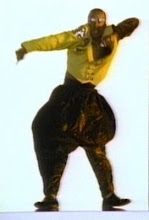
STOP: grammar time! I'm just an ordinary person who loves technicolour balloon pants and grammar. I also love you and that cute thing you do with your hair when you're nervous – and because I think you're so awesome, I'm here to add to your awesomeness with amazing grammar skills. Remember the Planeteers? You will be like all of them rolled into one when you combine with the magnanimous might of grammar!