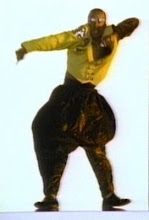
Because of MC Grammar, you basically know everything now. You know how to change a light bulb, and what sort of light bulb goes into an IKEA lamp. You know how to unscrew a fluorescent light bulb and also what wattage goes into a fluorescent light bulb.
And you also know all about apostrophes. You know that an apostrophe either indicates possession, such as Jane’s hat, or indicates a shortening of the word is or has, like Jane’s happy or Jane’s already left. When there is no apostrophe, it means that the ‘s’ is only there to show that there is more than one of something. You know that saying The kings come in splendour is a very different to saying The King’s come in splendour. Because one is plural and one is singular.
But did you know that it’s not all as simple as all that? Just when you thought grammar was simple, the real world has to interfere and fuck up your shit. This brings us to the debacle of Do’s and Don’ts
What’s happening with this term? Firstly, it’s inconsistent: the do has an apostrophe before the s but the don’t doesn’t. Secondly, why does the do have an apostrophe at all? It’s NOT possessive, is it? It doesn’t ‘own’ anything in the sentence, does it? No, it doesn’t.
But believe it or not, this is how it has to be. Why? For no other reason than the fact that it looks weird without it. It looks like ‘dos’, Spanish for ‘two’. It looks like you tried to write ‘does’ and failed. It looks like a whole other word, and this reason, and this reason only, it has an apostrophe in it.
And take a look at its partner in crime, don’ts. Don’ts won’t even tow the line for consistency’s sake and become don’t’s. Why? yep, you know it – because it that looks weird too. There are too many apostrophes (two), so the final result is that Do’s and don’ts is one of the biggest outlaws of grammar, and there’s nothing that any of us can do about it, but curse and shake our fists.
So how does it get away with it? Believe it or not, because it’s more correct than all the other options, and makes more sense. Let’s remember, the whole point of grammar isn’t actually to be correct for the sake of being correct, it’s to make sense, and to communicate to the widest audience possible. In this case, ‘Do’s and Don’ts’ is correct by association, meaning that because the other options are so confusing, it’s won by default. It’s like a handsome outlaw: you know it’s a murderous felon, but who can resist those dark locks and symmetrical jaw?
A word of caution though: in most other cases, you should always stop and pause for reflection before proceeding with an apostrophe. An apostrophe is like a beautiful woman or man that you meet at a bar. Sure, you’re knocked sideways by their longish hair, dyed criminally blond and almost pitch black at the roots, and the sensual darkish colouring just below their eyes that gives a hint of Mediterranean blood via Poland or Northern Italy, but don’t just dive in – get a good look at them! Is that intriguing peroxided hair and enticing dark roots just a result of the fact that they originally set out to be a glamour model, then sunk into the seamy world of hard drugs? And are those bags under their eyes just a result of Hepatitis B?
In the same way, when it comes to apostrophes, you need to ask yourself certain self-preserving questions. A common crime in grammar is to write something like I read 100’s of books online or the two large lion’s approached quickly. These are incorrect, because neither ‘1000’ or the lions, ‘own’ anything in the sentence, nor is the s a shortening of is. A good quality-control approach is to ask yourself ‘Am I actually writing 100 IS’, or, does ‘100’ actually ‘own’ something in this sentence? If the answer is no, and ‘100’ is just plural, then you don’t need an apostrophe.
Take note, grammar lovers, not everybody agrees on the state of Do's and Don'ts. Many people who also love grammar, will insist on taking a variety of measures, such as writing Dos and Don'ts, Do's and Don't's and also Dos and Dont's. MC Grammar says: increase the grammar peace, fellow word lovers. Although these version might be accepted in some situations, if you're writing something like an important document that a lot of people are going to read, it's best to stick to the modern, most widely accepted, and easiest to understand, Do's and Don'ts.
To finish off, let's check out this video from the 50's about dating. See how the video is correctly titled Do's and Don'ts? Now THAT's how to get a date.
Showing posts with label Hepatitis A and B. Show all posts
Showing posts with label Hepatitis A and B. Show all posts
Sunday, 27 June 2010

Monday, 10 August 2009
Please form an orderly queue for your good-grammar vaccination
MC Grammar recently received a series of vaccinations, and now feels ready to take on the world. Rabies, Hepatitis A and B can't hurt me, neither can Malaria, Diphtheria, Typhoid or Yellow Fever. It's a good feeling. Sorry all you anti-immunisation lobbyists, I'm immunised up to my eyeballs and I love it.
Some fun times were had over the last few weeks, as I regularly rocked up to my local surgery and chatted cheerfully away to my nurse, as she cleverly lulled my muscles into relaxed state, before jabbing a total of 9 needles into me. But an interesting point was raised during the many afternoons I spent there: are you immune to, or immune from, a disease?
Before we go further, this might be a good moment to brush up on our understanding of prepositions. A preposition is a 'linking' word, such as to, from, over, or during. What they link is nouns, phrases or pronouns to the sentence. They're like the MC that introduce the main act. For example,
The book is beside the table.
That said, what's the story with being immune to, or immune from? Well brothers and sisters, it's a complicated story, because it depends what you're talking about. If you are talking about being protected from an 'undesirable circumstance' such as getting criminally prosecuted, or heavily taxed, then you are immune from. For example, you can be 'immune from arrest', or 'immune from criticism.'
However, when you're talking about something you're not susceptible or responsive to, you use immune to. For example 'I am immune to Polio.'
This is a tricky mother. The Oxford English Dictionary gives lots of examples of 'immune to' and 'immune from' that don't follow the pattern above. Merriam-Webster's Collegiate Dictionary uses the 'immune to' phrasing to include anything a person might be resistant to, for example, 'he was immune to all pleas.' It's one of those things that if you think about it too hard, you can fry your brain and alienate yourself from your loved ones.
MC Grammar thinks that if you just surf the preposition wave, this one sort of sorts itself out. When you think about it, it makes sense that you're immune 'from' something that you're trying to get away from, or would rather not happen, and you're immune 'to' something that you have personally arranged will never happen. Take MC Grammar and Rabies, for example, I will never meet my end by frothing at the mouth – I've seen to that.
Some fun times were had over the last few weeks, as I regularly rocked up to my local surgery and chatted cheerfully away to my nurse, as she cleverly lulled my muscles into relaxed state, before jabbing a total of 9 needles into me. But an interesting point was raised during the many afternoons I spent there: are you immune to, or immune from, a disease?
Before we go further, this might be a good moment to brush up on our understanding of prepositions. A preposition is a 'linking' word, such as to, from, over, or during. What they link is nouns, phrases or pronouns to the sentence. They're like the MC that introduce the main act. For example,
The book is beside the table.
That said, what's the story with being immune to, or immune from? Well brothers and sisters, it's a complicated story, because it depends what you're talking about. If you are talking about being protected from an 'undesirable circumstance' such as getting criminally prosecuted, or heavily taxed, then you are immune from. For example, you can be 'immune from arrest', or 'immune from criticism.'
However, when you're talking about something you're not susceptible or responsive to, you use immune to. For example 'I am immune to Polio.'
This is a tricky mother. The Oxford English Dictionary gives lots of examples of 'immune to' and 'immune from' that don't follow the pattern above. Merriam-Webster's Collegiate Dictionary uses the 'immune to' phrasing to include anything a person might be resistant to, for example, 'he was immune to all pleas.' It's one of those things that if you think about it too hard, you can fry your brain and alienate yourself from your loved ones.
MC Grammar thinks that if you just surf the preposition wave, this one sort of sorts itself out. When you think about it, it makes sense that you're immune 'from' something that you're trying to get away from, or would rather not happen, and you're immune 'to' something that you have personally arranged will never happen. Take MC Grammar and Rabies, for example, I will never meet my end by frothing at the mouth – I've seen to that.
Subscribe to:
Posts (Atom)