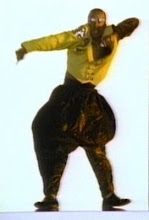
During a very enjoyable afternoon of internet browsing, I image-googled 'that vs which', and this image came up:
Mysterious.
So, when do you use that, and when do you use which?
The easiest way to remember how to use these two words correctly is to remember that you use that for a restrictive clause, and which for everything else.
A restrictive clause is a clause that limits what is being talked about. For example:
Dogs that bark get kidnapped around here.
In these clauses, you can't just leave out the bit about barking, because the kind of dogs we are talking about is restricted to dogs that bark.
However, if you say:
Dogs, which bark, get kidnapped around here
It means that it is not just dogs that bark that get kidnapped, but pretty much any dog that gets kidnapped. The barking bit is just extra information that might give you when they are overly interested in details.
Things are complicated in the modern world, just as they are in the world of grammar. It's a medieval battlefield, except instead of fighting with mallets and poison arrows, the fighting is done with sales targets and active selling-point skills. And just like in business, 'developing' happens in the world of grammar. This is where the participle comes in.
A participle is a verb, developed. Participles take two forms: past participles and present participles. Present participles are all those words like 'running', 'working', 'talking', etc. Past participles are all those words like 'brought', 'cooked', and 'mashed', and other crazy irregular verbs like 'went', 'drove' and 'ate'.
Participles are those things that you just intrinsically know about, but may not have known the exact name for them. But hold on, because we need to take participles to the next level now. Because participles aren't just verbs wearing outfits appropriate for the occasion, they are more like grammar-grenades. If you put them in the wrong place, everything flies apart. Look at the example of the dangling participle. A dangling participle is a verb that has been tacked on to the beginning or end of a sentence, and doesn't 'belong' to anything.
Take for this sentence, for example.
Leaning out the car window, the air was warm and fragrant. The problem here is that the only subject, or 'thing that the actions are being done to', is the air. We know that the thing that is leaning out of the car window is a person, but they haven't been written into the sentence. I'll write more about subjects and complete sentences next time, but for now, let's just say that in this case, the participle 'leaning', is not being 'done' by anyone, which means that technically, it's the air that is leaning out of the car window.
But before you start panicking and counting up all the times you hung participles on the edges of sentences like so many ragged christmas trees, don't panic, because there are some times when dangling participles are accepted as standard ways of expressing the way the speaker feels, even if that speaker is not mentioned in the sentence. For example:
Speaking of kumquat farming, Jenny is running her own plantation now. Here, Jenny is the subject of the sentence, but the participle 'speaking' is not being done by her. We understand that the speaker is the person doing the 'speaking'.
But a dangling modifier is very precise, and you can't take them for granted. For example, in the sentence, 'Ranting, she stormed out of the room' it makes sense here that the ranting is being done by the woman. However, if you say 'She stormed out of the room ranting', it means the room was doing the ranting.
There can be no doubt, it's hard to fight your way through the grammar jungle. But not impossible. That's why MC Grammar is here to help. To finish up, here's a clip that reflects on how a dangling participle must feel: so very lonely.
STOP: grammar time! I'm just an ordinary person who loves technicolour balloon pants and grammar. I also love you and that cute thing you do with your hair when you're nervous – and because I think you're so awesome, I'm here to add to your awesomeness with amazing grammar skills. Remember the Planeteers? You will be like all of them rolled into one when you combine with the magnanimous might of grammar!