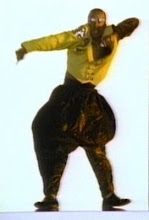
As we all know, when you run a grammar blog, you run the risk of making your own grammar and spelling mistakes as every turn.
And indeed, the saying 'don't throw stones in a glass house' has proved to be particularly significant for me, because my house is actually made of glass. I don't know what I was thinking when I bought it: I guess that I liked how much sunlight the house got. But in reality, living in a glass house is really difficult. Anyone can look in at any time, which makes stepping out of the shower an arrestable offence. In fact, having a shower at all is an arrestable offence, since that has glass walls too.
And just like my house made of glass, this blog is also made of glass, and mistakes that I make in it are like stones. But as I have said before, we all make mistakes in our spelling and grammar, even MC Grammar. Enjoy!
In 'Pronounciation that could get you killed' I wrote 'ain't so such word as irregardless' and, I didn't put a full stop at the end of the first sentence of this post.
In 'Rainbow Grammar Family', I spelled 'spelling' with two l's. Ironic, considering the content of that post!
In 'whom vs who', I wrote 'a online viral story'. How foolish, as I should have used an 'an'.
In 'Indecent Preposition', I placed a hyphen where there should have been an en-dash when I wrote 'Hey - I didn't know they knew each other!' and, I wrote 'They live in same apartment block' instead of 'they live in the same apartment block'.
In 'Mission: To pause for half a second', I wrote 'again, this move seemed to make absolutely no sense', instead of 'this movie seemed to make absolutely no sense'.
And you have to ask yourself, what other outlandish mistakes have I made without even realising?
That's where you come in. These mistakes cannot be brought to light unless avid readers like yourselves step forward to take out the trash. Which, incidentally, I take out in a glass trash can.
Sunday, 25 March 2012

Wednesday, 14 March 2012
Mission: To pause for half a second.
At the end of last year, the fourth Mission: Impossible film came out.
I remember seeing the first Mission: Impossible film. I was just a slip of a thing, and me and my friends had a sleep over and watched it. But no matter how hard I tried, I had no fucking idea what was going on. As far as I could tell, some people the main guy cared about were killed, and he somehow knew who was to blame, so he packed a bag, made some phone calls from the airport, and killed everybody. There was a very confusing sequence where he abseiled from the roof in order to steal something, but really, that's all I could work out.
Four years later, the second Mission: Impossible film came out, and I went to the movies on a date. Again, this move seemed to make absolutely no sense. It had something to do with a vial of disease, a woman who was good at driving a car, and Tom Cruise also enjoyed abseiling in that film too, but mostly just for leisure in the same way that some people enjoy taking a nap in the middle of the day, or having a kit kat in the middle of the afternoon.
When the third film came out, and I found out about it, I exclaimed loudly: 'no fucking way am I going to see that movie. The last two didn't make sense, and I've got too much on my plate, and no one on God's green earth can trick me into seeing it.'
And I was right. Now, with the fourth film on it's way, I still feel happy with my realisation that the Mission: Impossible films make absolutely no sense.
But there is one thing about the Mission: Impossible films that keeps me awake at night, and that it the mysterious colon that lives between the words 'mission' and 'impossible'.
The colon looks like this

Although it resembles the semi-colon, the colon is used for telling the reader that what follows in a sentence will prove, clarify, explain, or simply list items in relation to what is referred to before.
The verdict was in: The jury took their places with resolved faces.
There could be no mistaking it: It was the same gnome she had thrown out the week before.
She checked the contents of her bag again: Lipstick, banana, diary, passport, pick axe, chestnuts and bleach.
Another useful way to think of the colon is to regard it as a brief pause – it's a little longer than a comma or a dash, and can be used to lend importance to what is about to follow it.
So, considering all this, having a colon in the middle of 'mission' and 'impossible' is like saying 'this mission is totally impossible'. The 'impossible' part is the clarifying part, explaining exactly what short of mission we're dealing with here. A damn impossible one.
I remember seeing the first Mission: Impossible film. I was just a slip of a thing, and me and my friends had a sleep over and watched it. But no matter how hard I tried, I had no fucking idea what was going on. As far as I could tell, some people the main guy cared about were killed, and he somehow knew who was to blame, so he packed a bag, made some phone calls from the airport, and killed everybody. There was a very confusing sequence where he abseiled from the roof in order to steal something, but really, that's all I could work out.
Four years later, the second Mission: Impossible film came out, and I went to the movies on a date. Again, this move seemed to make absolutely no sense. It had something to do with a vial of disease, a woman who was good at driving a car, and Tom Cruise also enjoyed abseiling in that film too, but mostly just for leisure in the same way that some people enjoy taking a nap in the middle of the day, or having a kit kat in the middle of the afternoon.
When the third film came out, and I found out about it, I exclaimed loudly: 'no fucking way am I going to see that movie. The last two didn't make sense, and I've got too much on my plate, and no one on God's green earth can trick me into seeing it.'
And I was right. Now, with the fourth film on it's way, I still feel happy with my realisation that the Mission: Impossible films make absolutely no sense.
But there is one thing about the Mission: Impossible films that keeps me awake at night, and that it the mysterious colon that lives between the words 'mission' and 'impossible'.
The colon looks like this
Although it resembles the semi-colon, the colon is used for telling the reader that what follows in a sentence will prove, clarify, explain, or simply list items in relation to what is referred to before.
The verdict was in: The jury took their places with resolved faces.
There could be no mistaking it: It was the same gnome she had thrown out the week before.
She checked the contents of her bag again: Lipstick, banana, diary, passport, pick axe, chestnuts and bleach.
Another useful way to think of the colon is to regard it as a brief pause – it's a little longer than a comma or a dash, and can be used to lend importance to what is about to follow it.
So, considering all this, having a colon in the middle of 'mission' and 'impossible' is like saying 'this mission is totally impossible'. The 'impossible' part is the clarifying part, explaining exactly what short of mission we're dealing with here. A damn impossible one.
 |
| 'Lucky no-one put a CCTV camera in here, or this would look totally stupid.' |
Tuesday, 31 January 2012
And now, a post about whether you can use 'and' at the start of a sentence.
When I was at school, Our Sacred Lady of the Mean Streets and Correct Grammar, teachers told me that if I used ‘and’ at the start of a sentence, that it was the worst thing I could ever do. This was also the way they felt about using ‘because’ at the start of a sentence.
This was because these words are conjunctions.A conjunction is a word that connects two other words, sentences, phrases or clauses together. For some reason, many teachers used to think that it was a bit unclassy to start a sentence like this, maybe because it makes a sentence look incomplete.
In times like this, I like to turn to The New Fowler’s Modern English Usage book, which says
‘There is a persistent belief that it is improper to begin a sentence with 'and', but this prohibition has been cheerfully ignored by standard authors from Anglo-Saxon times onwards’
Snap, New Fowler’s Modern English. There is pretty much no reason why you can’t use ‘and’ at the start of a sentence. In fact, almost all of the best writers do this whenever they feel like it. Take J.M Coetzee for example:
‘In his youth Dostoevsky had been attracted to utopian socialism of the Fourietrist variety. But four years in a prison camp in Siberia shook his faith.’
Here, you can see that far from being weird and wrong, the conjunction ‘and’ has been a helpful sentence opener.
For any teachers reading this, hey, I know you were just trying to do the right thing. But for all you up-and-coming teachers whose dream it is to create the grammar superstars of tomorrow, just remember that not all clauses have to be complete – a sentence can be dependant on another clause in order to make sense.
To see us out, let’s appreciate this excellent writing from Daphne Du Maurier, as her heroine, an unnamed woman, wanders through the ruins of her old home.
‘And there were other trees as well, trees that I did not recognise, squat oaks and tortured elms that straggled cheek by jowl with the beeches, and had thrust themselves out of the quiet earth, along with monster shrubs and plants, none of which I remembered.’
Creepy, conjunction-begun stuff!
This was because these words are conjunctions.A conjunction is a word that connects two other words, sentences, phrases or clauses together. For some reason, many teachers used to think that it was a bit unclassy to start a sentence like this, maybe because it makes a sentence look incomplete.
In times like this, I like to turn to The New Fowler’s Modern English Usage book, which says
‘There is a persistent belief that it is improper to begin a sentence with 'and', but this prohibition has been cheerfully ignored by standard authors from Anglo-Saxon times onwards’
Snap, New Fowler’s Modern English. There is pretty much no reason why you can’t use ‘and’ at the start of a sentence. In fact, almost all of the best writers do this whenever they feel like it. Take J.M Coetzee for example:
‘In his youth Dostoevsky had been attracted to utopian socialism of the Fourietrist variety. But four years in a prison camp in Siberia shook his faith.’
Here, you can see that far from being weird and wrong, the conjunction ‘and’ has been a helpful sentence opener.
For any teachers reading this, hey, I know you were just trying to do the right thing. But for all you up-and-coming teachers whose dream it is to create the grammar superstars of tomorrow, just remember that not all clauses have to be complete – a sentence can be dependant on another clause in order to make sense.
To see us out, let’s appreciate this excellent writing from Daphne Du Maurier, as her heroine, an unnamed woman, wanders through the ruins of her old home.
‘And there were other trees as well, trees that I did not recognise, squat oaks and tortured elms that straggled cheek by jowl with the beeches, and had thrust themselves out of the quiet earth, along with monster shrubs and plants, none of which I remembered.’
Creepy, conjunction-begun stuff!
Monday, 23 January 2012
Capitalisation for titles
As you know, we have once before jumped into the crystal clear waters of how to use capital letters.
But my fans have told me that they are hungry for more information. They have contacted me via twitter, facebook, gmail chat and telegram, begging me to give them more information about how to use capital letters in the right way.
And certainly, capital letters are confusing, not least when you are writing the title of something, such as a memoir you have just written about your life, or a thesis on the mating patterns of salmon, or even a power ballard. Questions you might find yourself asking are "Should my power ballard be written 'The Love Exchange Only Hands Out Monopoly Money', or 'The love exchange only hands out monopoly money', OR should only some of those words be in capitalised?"
Let me explain.
When you are writing titles, some words need to be capitalised, and others don't need to be. The ones that do need to be capitalised are:
The words that should not be capitalised, unless they are the first or last word, are:
All these words fall into the first category of words that should be capitalised. On the other hand, a title like:
Who's That Man over there?
Would not need to be all capitals because the words in blue are prepositions, which are not to be capitalised.
Some other examples:
Believing the Lie (i.e.first word/article/last word)
Diary of a Whimpy Kid (i.e. first word/short adposition/article/adjective/last word)
It Was Just a Bit of Fun (i.e first word/verb/adjective/article/noun/adposition/last word)
These Titles Seem to Be Getting Longer and Longer (first word/noun/verb/adposition/verb/verb/adjective/coordinating conjunction/adjective)
But HOLD THE FUCKING PHONE for a minute. You might have noticed that like some sort of hypocritical monstrous dictator of some sort, MC Grammar himself does not follow these rules in his own blog posts. What the fuck? Well, this is where capitalisation for titles gets hazy, because the rules for blog titles are still hazy. For example, the very fine Julie Burchill, a very long-established journalist, only capitalises the first word of her titles, and any proper nouns that come up, whereas the very funny Cody Johnston tends to capitalise everything except coordinating conjunctions. Both are highly respectable journalists and writers, both are well-school in the fine arts of grammar. So who to follow? Well, the best bet is to follow the rules I have set up here, but just remember that the internet is a changing beast, and what rules arise for capitalisations, we simply don't know yet.
To see us out, let's sit back, relax, and listen to the very excellent Capital Letters, who never mess up their capitalisations of titles, and hope that someday you can be like them.
But my fans have told me that they are hungry for more information. They have contacted me via twitter, facebook, gmail chat and telegram, begging me to give them more information about how to use capital letters in the right way.
And certainly, capital letters are confusing, not least when you are writing the title of something, such as a memoir you have just written about your life, or a thesis on the mating patterns of salmon, or even a power ballard. Questions you might find yourself asking are "Should my power ballard be written 'The Love Exchange Only Hands Out Monopoly Money', or 'The love exchange only hands out monopoly money', OR should only some of those words be in capitalised?"
Let me explain.
When you are writing titles, some words need to be capitalised, and others don't need to be. The ones that do need to be capitalised are:
- The first and last words of the title; or
- All nouns, pronouns, verbs, adverbs, and adjectives
The words that should not be capitalised, unless they are the first or last word, are:
- articles (a, an, the)
- conjunctions (and, but, for, nor, or, so, yet)
- short adpositions (3 and less letters long): at, by, for, in, of, off, on, out, to, up
- some Latin abbreviations (most common only): c./ca./cca. (circa), et al. (et alii), etc. (et cetera), e.g. (exempli gratia), i.e. (id est), lb. (libra), vs. (versus).
- medium adpositions (4 letters long): down, from, into, like, near, onto, over, than, with, upon.
That Tall Man, He Runs Fast!
All these words fall into the first category of words that should be capitalised. On the other hand, a title like:
Who's That Man over there?
Would not need to be all capitals because the words in blue are prepositions, which are not to be capitalised.
Some other examples:
Believing the Lie (i.e.first word/article/last word)
Diary of a Whimpy Kid (i.e. first word/short adposition/article/adjective/last word)
It Was Just a Bit of Fun (i.e first word/verb/adjective/article/noun/adposition/last word)
These Titles Seem to Be Getting Longer and Longer (first word/noun/verb/adposition/verb/verb/adjective/coordinating conjunction/adjective)
But HOLD THE FUCKING PHONE for a minute. You might have noticed that like some sort of hypocritical monstrous dictator of some sort, MC Grammar himself does not follow these rules in his own blog posts. What the fuck? Well, this is where capitalisation for titles gets hazy, because the rules for blog titles are still hazy. For example, the very fine Julie Burchill, a very long-established journalist, only capitalises the first word of her titles, and any proper nouns that come up, whereas the very funny Cody Johnston tends to capitalise everything except coordinating conjunctions. Both are highly respectable journalists and writers, both are well-school in the fine arts of grammar. So who to follow? Well, the best bet is to follow the rules I have set up here, but just remember that the internet is a changing beast, and what rules arise for capitalisations, we simply don't know yet.
To see us out, let's sit back, relax, and listen to the very excellent Capital Letters, who never mess up their capitalisations of titles, and hope that someday you can be like them.
Saturday, 26 November 2011
Focussed vs Focused
As you know, we have already battled with the rules of when to use different spellings for the same words, and it has been no small task.
But the thing you have to understand that you can never really win the battle with words – you can only hold them back for long enough to crouch down in your trench and write a letter to your loved ones, telling them how much you miss the farm, and that you don't know when you'll be home.
Some words have two different spellings in the same country, and can be used interchangeably. These can hurt your head.
A prime offender of this is the word focussed. In US spelling, this word is spelt focused. In UK and Australian English, it's spelt focussed. But it's not really as straight-cut as that, because Australian English can't make it's mind up which one to use.
According to The Style Guide, which is the official guide to all the spellings in Australia, you should use focussed. But in the majority of publications, such as the Sydney Morning Herald newspaper, the spelling focused is used instead. And you know when the Sydney Morning Herald is involved, shit is serious.
I know what you're thinking: You thinking 'what the fuck?! Why can't they just decide on one spelling!?' Well, you make a good point, but you're just a foot soldier on the grammar battlefield, and the question of focused and focussed is an interesting example of Australian spelling being an English ho, incorporating both UK and US spellings without so much as blushing.
The bottom line is that when you are in Australia, you have the option to use both spellings, as long as you are consistent. You can't just use focussed and focused in the same document - you need to stick with one, or you'll look like you've gone insane with choice.
But the thing you have to understand that you can never really win the battle with words – you can only hold them back for long enough to crouch down in your trench and write a letter to your loved ones, telling them how much you miss the farm, and that you don't know when you'll be home.
Some words have two different spellings in the same country, and can be used interchangeably. These can hurt your head.
A prime offender of this is the word focussed. In US spelling, this word is spelt focused. In UK and Australian English, it's spelt focussed. But it's not really as straight-cut as that, because Australian English can't make it's mind up which one to use.
According to The Style Guide, which is the official guide to all the spellings in Australia, you should use focussed. But in the majority of publications, such as the Sydney Morning Herald newspaper, the spelling focused is used instead. And you know when the Sydney Morning Herald is involved, shit is serious.
I know what you're thinking: You thinking 'what the fuck?! Why can't they just decide on one spelling!?' Well, you make a good point, but you're just a foot soldier on the grammar battlefield, and the question of focused and focussed is an interesting example of Australian spelling being an English ho, incorporating both UK and US spellings without so much as blushing.
The bottom line is that when you are in Australia, you have the option to use both spellings, as long as you are consistent. You can't just use focussed and focused in the same document - you need to stick with one, or you'll look like you've gone insane with choice.
Thursday, 27 October 2011
Who vs whom Part 2 – grammar suffers a bulletwound in the war-torn battlefield of hurt feelings
As you know, MC Grammar doesn't get upset very often. The only people that I hate are Robert Mugabe and all manufacturers of corn syrup. But lately, there has been something else that has been getting my goat – what is up with people using archaic language in an argument, just because they think that it makes them look smart and scares their opponents?
This leads us to the story of GASP Jeans, a clothes store that became part of an online viral story last month because of emails that were exchanged between a customer, Keara O'Neill, and a customer service-type person, Matthew Chidgey
From Keara O'Neill, the shopper:
I had the privilege of shopping at your brand new Chapel St store on Saturday 24th September with my three bridesmaids in tow. On the hunt for bridesmaids dresses and a hens dress for myself we walked into the store and were automatically pounced on by a male staff member, I understand that this is protocol for many retail outlets and ours is no different.
The staff member was initially funny and extremely helpful with sizes etc. I chose a bright pink dress to try on but was unable to do the zip up so asked for the size up, when I eventually got the correct size and came out of the change room I was unable to discuss the likes or dislikes of the dress with my bridesmaids as the sales assistant kept saying “you should just get it”, when I told him I would think about it, he pulled me aside and whispered “Is it the price your worried about”. By now I was extremely frustrated, and again told him I’d think about it, I walked back into the change room and closed the door behind me, only to have it pushed open with the sales assistant half standing in my change room, again whispering “I think you should just get it”, when I gave him attitude and said rudely, “I already told you I would think about it”, he then replied, “With your figure I really think you should buy it”.
I’m not sure exactly what he meant by that, but considering the attitude used to deliver such a statement I can only imagine that it was an immature dig in relation to my healthy size 12 frame. I got changed in a hurry and walked right out of the change rooms and out of the store, I could hear the sales assistant yelling out to me, but I just ignored him and continued to leave, assuming my bridesmaids would follow. After waiting down the road for my bridesmaids to come out of the store I was told by one of them that the sales assistant yelled out “Have fun finding something at Supre”, when one of them approached him in regards to his comments, he replied “I knew you girls were a joke the minute you walked in”. When my bridesmaids walked out of the store another two customers walked out with them, they too could not believe the immaturity of the sales assistant.
I have worked in retail for 12 years and have come across an array of customer complaints over the years, none of which come even close to what I encountered on Saturday at your store, I wish I was exaggerating but unfortunately for your company this person actually exists and is working in one of your stores. I am pretty laid back and was quite happy just leaving your store, it was my bridesmaids who felt the need to say something to him…I dread to think how many customers he has not only offended but how many customers have left your store due to the pressure placed on getting the sale, and then to be harassed when that sale hasn’t taken place.
Ring me, don’t ring, not fussed…I’m just one retailer notifying another of an extremely inappropriate sales assistant.
Keara O'Neil
And here's the response by GASP area manager Matthew Chidgey:
Dear Keara O’Neil,
Having now had the privilege of having both version of events, I am now in a position to respond to your complaint.
From the very outset, one thing that you should be mindful of is; Our product offerings are very, very carefully selected, so to ensure that we do not appeal to a broad customer base. This is something which is always at the forefront of our minds when undertaking buying duties.
The reason for this is to ensure that we only carry products which appeal to a very fashion forward consumer. This by default means that the customer whom is acclimatised to buying from “clothing for the masses” type retailers, is almost frightened by our range, sometimes we have found that this type of customer, almost finds our dresses funny, and on occasion noted comments such as 'it looks like a dead flamingo'. When we receive comments like this, we like to give ourselves and our buyers, a big pat on the back, because we know we are doing our job right, and modus operandi is being upheld.
Our range is worn by A list celebrities to the likes of Kim Kardashian, Selena Gomez and Katy Perry to name only a few. Now, as one might appreciate, the style counsel for these types of celebrities are not ones to pick “run of the mill” type clothing, and they do so on the basis to ensure that the styles are cutting edge, and only worn by a select few. Similarly these items are priced such that they remain inaccessible to the undesirable.
Insofar as our employee goes; Similar to our product offerings, our employees are selected with a similar approach. Chris whom served you is a qualified stylist whom has a sixth sense for fashion, and Chris’s only problem is that he is too good at what he does, and as I am sure you are aware, people whom are talented, generally do not tolerate having their time wasted, which is the reason you were provoked to leave the store.
Whilst I concede that you work for chain retailer, unfortunately that does not make us like for like. It is probably fair to assume, a lot of what I have said in this email, either doesn’t make sense to you, or you totally disagree with it all, which is what I would expect (unless of course I have you totally wrong – which I doubt).
Let me guess, you would never, ever hire Chris in the course of your duty, would you? This is the very reason, why your comment “from one retailer to another” is so disproportionate, it’s almost as though we are in a totally different industries. Chris is a retail superstar, who possess unparalleled ability, and I am sorry you feel upset by him, but he knew you were not going to buy anything before you even left your house.
So if you would like to do us any favours, please do not waste our retail staff’s time, because as you have already seen, they will not tolerate it. I am sure there are plenty of shops that appease your taste, so I respectfully ask that you side step our store during future window shopping expeditions.
Thank you for your enquiry.
The best part of this email is the sign off, 'thank you for your inquiry' That's the sting the tail of this already very poisonous and aggressive scorpion's tale.
Let's have a look at Mr Chidgey's use of the pronoun, 'whom'.
...the customer whom is acclimatised to buying from “clothing for the masses” type retailers, is almost frightened by our range...
Chris whom served you is a qualified stylist whom has a sixth sense for fashion...
...people whom are talented, generally do not tolerate having their time wasted...
Matthew Chidgey! Why are you so fashion forward, and yet so grammar stationary! Why can't it be both! Why can't your sixth sense for fashion also come with a first sense for grammar correctness? You wordlessly promise so much with your fine, coiffed hair, your sharp, micro-fibre suit, but beyond your gilded exterior you are full of not just archaic language, but also plainly incorrect grammar.
As we have learnt before, traditionally who was used to refer to refer to the subject of a sentence or clause. For example:
I know it was you who stepped on my fish
Whom was used when referring to the object of a clause. For example:
To whom were you speaking just then?
However, the use of whom is now mostly archaic. This means that it has fallen out of use so much that it's no longer the right way to say something, and in most cases where you would have said 'whom' fifty years ago, it is now correct to say 'who'.
The only time you really need to use 'whom' when it comes after a preposition in more formal language. For example,
To whom it may concern
In all other situations, you can use 'who'.
So, unfortunately for Matthew Chidgey, he has let himself – and us – down on two fronts. He has used whom even though it is archaic, and in the places where he has used it, he's not even using it to refer to the object of a sentence. WTF, Matthew Chidgey!
 Matthew Chidgey, please try to be like fisherman Julian Chidgey, who has taken life by the horns and caught this huge fish.
This leads us to the story of GASP Jeans, a clothes store that became part of an online viral story last month because of emails that were exchanged between a customer, Keara O'Neill, and a customer service-type person, Matthew Chidgey
From Keara O'Neill, the shopper:
I had the privilege of shopping at your brand new Chapel St store on Saturday 24th September with my three bridesmaids in tow. On the hunt for bridesmaids dresses and a hens dress for myself we walked into the store and were automatically pounced on by a male staff member, I understand that this is protocol for many retail outlets and ours is no different.
The staff member was initially funny and extremely helpful with sizes etc. I chose a bright pink dress to try on but was unable to do the zip up so asked for the size up, when I eventually got the correct size and came out of the change room I was unable to discuss the likes or dislikes of the dress with my bridesmaids as the sales assistant kept saying “you should just get it”, when I told him I would think about it, he pulled me aside and whispered “Is it the price your worried about”. By now I was extremely frustrated, and again told him I’d think about it, I walked back into the change room and closed the door behind me, only to have it pushed open with the sales assistant half standing in my change room, again whispering “I think you should just get it”, when I gave him attitude and said rudely, “I already told you I would think about it”, he then replied, “With your figure I really think you should buy it”.
I’m not sure exactly what he meant by that, but considering the attitude used to deliver such a statement I can only imagine that it was an immature dig in relation to my healthy size 12 frame. I got changed in a hurry and walked right out of the change rooms and out of the store, I could hear the sales assistant yelling out to me, but I just ignored him and continued to leave, assuming my bridesmaids would follow. After waiting down the road for my bridesmaids to come out of the store I was told by one of them that the sales assistant yelled out “Have fun finding something at Supre”, when one of them approached him in regards to his comments, he replied “I knew you girls were a joke the minute you walked in”. When my bridesmaids walked out of the store another two customers walked out with them, they too could not believe the immaturity of the sales assistant.
I have worked in retail for 12 years and have come across an array of customer complaints over the years, none of which come even close to what I encountered on Saturday at your store, I wish I was exaggerating but unfortunately for your company this person actually exists and is working in one of your stores. I am pretty laid back and was quite happy just leaving your store, it was my bridesmaids who felt the need to say something to him…I dread to think how many customers he has not only offended but how many customers have left your store due to the pressure placed on getting the sale, and then to be harassed when that sale hasn’t taken place.
Ring me, don’t ring, not fussed…I’m just one retailer notifying another of an extremely inappropriate sales assistant.
Keara O'Neil
And here's the response by GASP area manager Matthew Chidgey:
Dear Keara O’Neil,
Having now had the privilege of having both version of events, I am now in a position to respond to your complaint.
From the very outset, one thing that you should be mindful of is; Our product offerings are very, very carefully selected, so to ensure that we do not appeal to a broad customer base. This is something which is always at the forefront of our minds when undertaking buying duties.
The reason for this is to ensure that we only carry products which appeal to a very fashion forward consumer. This by default means that the customer whom is acclimatised to buying from “clothing for the masses” type retailers, is almost frightened by our range, sometimes we have found that this type of customer, almost finds our dresses funny, and on occasion noted comments such as 'it looks like a dead flamingo'. When we receive comments like this, we like to give ourselves and our buyers, a big pat on the back, because we know we are doing our job right, and modus operandi is being upheld.
Our range is worn by A list celebrities to the likes of Kim Kardashian, Selena Gomez and Katy Perry to name only a few. Now, as one might appreciate, the style counsel for these types of celebrities are not ones to pick “run of the mill” type clothing, and they do so on the basis to ensure that the styles are cutting edge, and only worn by a select few. Similarly these items are priced such that they remain inaccessible to the undesirable.
Insofar as our employee goes; Similar to our product offerings, our employees are selected with a similar approach. Chris whom served you is a qualified stylist whom has a sixth sense for fashion, and Chris’s only problem is that he is too good at what he does, and as I am sure you are aware, people whom are talented, generally do not tolerate having their time wasted, which is the reason you were provoked to leave the store.
Whilst I concede that you work for chain retailer, unfortunately that does not make us like for like. It is probably fair to assume, a lot of what I have said in this email, either doesn’t make sense to you, or you totally disagree with it all, which is what I would expect (unless of course I have you totally wrong – which I doubt).
Let me guess, you would never, ever hire Chris in the course of your duty, would you? This is the very reason, why your comment “from one retailer to another” is so disproportionate, it’s almost as though we are in a totally different industries. Chris is a retail superstar, who possess unparalleled ability, and I am sorry you feel upset by him, but he knew you were not going to buy anything before you even left your house.
So if you would like to do us any favours, please do not waste our retail staff’s time, because as you have already seen, they will not tolerate it. I am sure there are plenty of shops that appease your taste, so I respectfully ask that you side step our store during future window shopping expeditions.
Thank you for your enquiry.
The best part of this email is the sign off, 'thank you for your inquiry' That's the sting the tail of this already very poisonous and aggressive scorpion's tale.
Let's have a look at Mr Chidgey's use of the pronoun, 'whom'.
...the customer whom is acclimatised to buying from “clothing for the masses” type retailers, is almost frightened by our range...
Chris whom served you is a qualified stylist whom has a sixth sense for fashion...
...people whom are talented, generally do not tolerate having their time wasted...
Matthew Chidgey! Why are you so fashion forward, and yet so grammar stationary! Why can't it be both! Why can't your sixth sense for fashion also come with a first sense for grammar correctness? You wordlessly promise so much with your fine, coiffed hair, your sharp, micro-fibre suit, but beyond your gilded exterior you are full of not just archaic language, but also plainly incorrect grammar.
As we have learnt before, traditionally who was used to refer to refer to the subject of a sentence or clause. For example:
I know it was you who stepped on my fish
Whom was used when referring to the object of a clause. For example:
To whom were you speaking just then?
However, the use of whom is now mostly archaic. This means that it has fallen out of use so much that it's no longer the right way to say something, and in most cases where you would have said 'whom' fifty years ago, it is now correct to say 'who'.
The only time you really need to use 'whom' when it comes after a preposition in more formal language. For example,
To whom it may concern
In all other situations, you can use 'who'.
So, unfortunately for Matthew Chidgey, he has let himself – and us – down on two fronts. He has used whom even though it is archaic, and in the places where he has used it, he's not even using it to refer to the object of a sentence. WTF, Matthew Chidgey!

Wednesday, 19 October 2011
To lol or not to lol?
David Mitchell is someone who loves grammar. Every day he fights for a better understanding of grammar, and his passions also include the honesty of politicians and the rules of queuing.
So it's safe to say that David Mitchell is a kind of well-rounded soldier for goodness. Here, David talks about the abbreviation lol, and has some very interesting points about how awesome it really is.
So it's safe to say that David Mitchell is a kind of well-rounded soldier for goodness. Here, David talks about the abbreviation lol, and has some very interesting points about how awesome it really is.
Subscribe to:
Posts (Atom)